
12/01/2026 | Last updated: 01/06/2026
Once you reach 50, your body starts to show clear changes in bone density and muscle mass. However, this isn’t the time to slow down but the golden time to go to the gym to stay healthy and live longer.
At The New Gym, we believe the answer to “what exercise is best at 50” not only improves your physique but is also the key to enjoying life to the fullest.
What Exercise Is Best at 50? The 4 Most Suitable Types
Before getting into a detailed plan, you may be wondering what exercise is good and safe at 50. The New Gym will help you get to grips with the 4 core types of training.
1. Strength Training
This is the most important type for people over 50. According to the National Institute on Aging, the NIH’s ageing research agency, strength training helps fight age-related muscle loss (Sarcopenia) while supporting bone health.
- How to train: Gym machines (safe for beginners), light dumbbells, resistance bands.
- Recommended frequency: 2-3 sessions a week, 30-45 minutes each.
2. Moderate Cardio (Aerobic Exercise)
Cardiovascular exercise that maintains endurance and heart health is especially important as you age. According to the American Heart Association, adults, including people over 50, should get at least 150 minutes of moderate activity a week to reduce the risk of heart disease and stroke.
- How to train: Brisk walking, cycling, swimming, the elliptical.
- Recommended frequency: 4-5 sessions a week, 30 minutes each.
3. Flexibility and Stretching Exercises
Age makes joints and muscles less flexible, so regular stretching helps maintain your range of motion and reduce aches. It’s the “unglamorous” type but extremely necessary for moving comfortably every day.
- How to train: Gentle yoga, Pilates, static stretches after your session.
- Recommended frequency: 5-7 sessions a week, 10-15 minutes each.
4. Balance Training
Balance declines after 50, increasing the risk of falls. Regular balance training helps you walk steadily and react faster in unexpected situations.
- How to train: Standing on one leg, heel-to-toe walk, Tai Chi.
- Recommended frequency: Built into your sessions, at least 3 times a week.
Why Do You Need to Keep Going to the Gym at 50?
Inactivity in older adults can lead to muscle loss (Sarcopenia) and osteoporosis. According to research from the National Institutes of Health (NIH), resistance training in middle-aged and older adults increases muscle strength, improves balance and reduces the risk of falls.
The benefits of going to the gym at this stage include:
- Helping control blood sugar and blood pressure, when combined with treatment and diet as advised by your doctor.
- Better bone and joint health: Less neck and shoulder pain and more flexible knees.
- Better mental strength: Less stress, better sleep and a more relaxed mind.
Principles for Gym Training Over 50
To get the best results without injury, members at The New Gym should keep in mind:
- Warm up thoroughly: Older adults need about 10 minutes of warm-up to loosen the joints and boost circulation.
- Listen to your body: Don’t try to lift as heavy as when you were young. Focus on accurate technique and steady breathing.
- Vary your training: Combine weights (resistance), Cardio (heart health) and stretching (flexibility).
See also: The Most Effective Warm-Up Exercises Before the Gym
A Training Program for People Over 50
A Sample Weekly Gym Plan for People Over 50
Below is a balanced 3-day-a-week plan that gives your body enough time to recover:
| Day | Type of training | Suggested main exercises |
| Session 1 | Lower Body Strength | Lunges, Leg Press, Calf Raises. |
| Session 2 | Upper Body Strength | Machine Chest Press, Lat Pulldown, Light Shoulder Press. |
| Session 3 | Endurance & Flexibility | Walking on the Treadmill, Cycling, Yoga or full-body stretching. |
Step 1: Warm-Up (Getting Your Body Warm)
Before training, you need to “wake up” your joints and get your blood flowing to avoid cramps or aches.
Full-body warm-up (5 minutes): Choose one of the following machines and walk or move gently:
- Treadmill: Walk slowly as if strolling in the park.
- Elliptical: Moves both your arms and legs without knee pain.
- Rowing machine: Great for your heart.
Joint mobility (5 minutes): Do gentle on-the-spot movements to loosen your back, hips and shoulders. You can try “Wall Slides” (leaning against a wall and moving your arms up and down) to stretch your spine.
Note: Only move gently at the start of your session; save deep stretches (holding still in a stretch) for the end!

Step 2: Main Exercises (Building Strength)
For beginners, the safest approach is to use gym machines with fixed frames to protect your joints. Train 2-3 times a week, about 45 minutes each session.
Sample plan (4 sets x 10-15 reps per exercise – 90 seconds rest between sets):
- Chest Press (Bench Press/Chest Press): Sit at the machine, push the handles forward, then bring them back slowly. Strengthens your arms and firms your chest.
- Row: Sit up straight and pull the handles toward your lower belly. This exercise helps reduce back pain and correct your standing posture.
- Shoulder Press: Sit at the machine and push the handles straight overhead. Great for shoulder mobility.
- Lat Pull-Down: Sit firmly and pull the bar down from overhead to near your chest. Makes your back more resilient.
- Leg Press: Sit at the machine, use your legs to push the platform away, then bend them back slowly. This is the most important exercise for steady legs so you don’t tire when walking.
- Lunges: Standing in place, step one leg forward and gently lower yourself. Helps you keep your balance better.
Tip for progress: There’s no rush. If you do 10 reps this week, managing 11 next week is a big success. Every month, you can add 1kg to the weight if your body feels ready.

Step 3: Core and Cardio Training
Core exercises: After the machines, you can lie on a mat and do moves like gentle leg raises to firm your belly and protect your lower spine.
Cardio: Spend the last 15-20 minutes walking briskly or cycling slowly. According to research from the American Heart Association, regular cardio helps older adults reduce the risk of blood pressure and heart problems.
Step 4: Cool-Down (Recovery)
Don’t rush off! Spend 5 minutes letting your body return to normal:
Deep breathing: Breathe in deeply through your nose for 7 seconds and breathe out slowly through your mouth for 11 seconds. This helps your nervous system relax
Gentle stretching: Lightly stretch your arms and legs and hold for 20 seconds.
See also: Why Do You Need to Cool Down After Training? The Most Effective Cool-Down Exercises
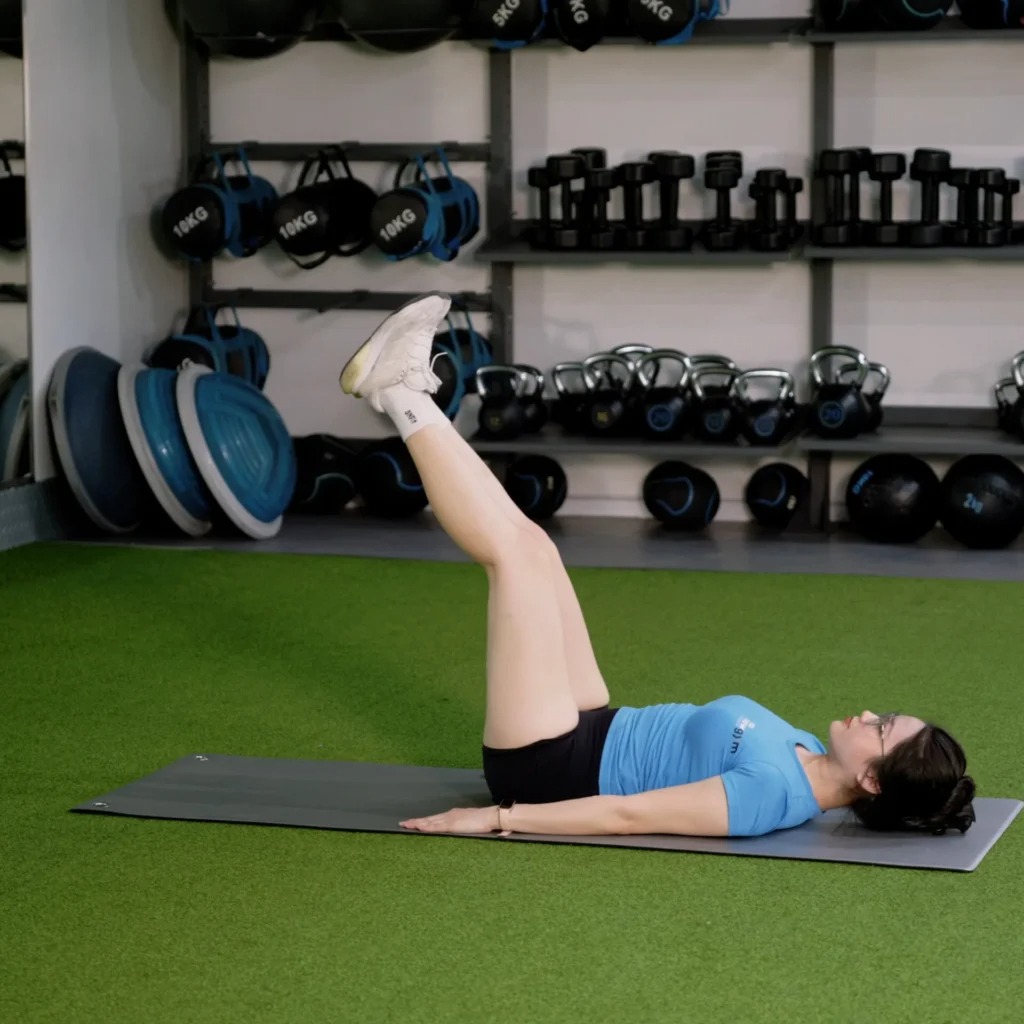
Summary of the “Rejuvenating” Plan for Older Adults
To get the best results without strain, remember these 6 simple steps:
- Warm up: Like starting a car engine, you need 10 minutes of warm-up to get your blood flowing and your heart and lungs ready for the session.
- Activate your joints: Use your own body (no weights) to lubricate your joints, making your arms and legs more flexible before the main exercises.
- Full-body strength: Do Push and Pull movements rhythmically. At The New Gym, prioritise machines so your legs and back get the safest support.
- Core training: Even simple moves lying on a mat are enough to protect your spine and effectively reduce back pain.
- Walking/Cycling (Cardio): Do it at the start or end of your session to train your heart’s “endurance”, helping you move quickly without getting out of breath.
- Relax (Cool-down): Spend a few minutes loosening up to make your body feel better and reduce soreness when you get home.
5 Common Mistakes People Over 50 Make at the Gym
The New Gym sees many older members who train hard but still get injured or don’t see results because of basic mistakes. Let’s go through the 5 most common ones.
Training as Heavy as When You Were Young
Many people who lifted weights when they were young want to go back to their old weights. But muscles and joints have changed over 20-30 years, so lifting too heavy easily causes muscle tears and ligament injuries.
How to fix it: Start at 50% of the weight you think you can lift, then add 1kg a month if it feels comfortable.
Skipping the Warm-Up or Rushing It
People over 50 have less flexible joints and slower circulation, so a rushed warm-up is the fastest route to muscle pain, cramps and knee injuries.
How to fix it: Spend at least 10-15 minutes warming up: 5 minutes of slow walking on the treadmill + 5-10 minutes of arm, shoulder and hip mobility before every session.
No Recovery Days
People over 50 usually need more recovery time than younger people. Yet many still train 5-6 days a week like when they were young, easily leading to exhaustion and overtraining.
How to fix it: A maximum of 3 gym sessions a week, with light walking or yoga on the other days. Sleep 7-8 hours a night for optimal recovery.
Skipping Resistance Training and Only Walking
Many people think “at this age, walking is enough”. Walking is good for your heart but not enough to fight muscle loss (Sarcopenia), so you need resistance training too. Otherwise, after a few years your arms and legs will gradually weaken, making it hard to grip things and walk steadily.
How to fix it: Combine 2-3 resistance sessions (gym machines, light weights) with 3-4 walking/light cardio sessions a week.
Not Consulting a Doctor Before Training
People over 50 often have underlying conditions (blood pressure, heart disease, diabetes, osteoarthritis), so starting at the gym without asking a doctor is a serious risk, especially with high-intensity cardio.
How to fix it: Before starting a new training program, get a general health check and ask your doctor about a suitable training intensity.
Who Should Be Careful at the Gym After 50?
Get a health check and ask your doctor about training intensity before starting if you:
- Have heart disease, high blood pressure or diabetes.
- Have osteoporosis, or osteoarthritis of the knee, hip or spine.
- Have had bone or joint surgery or injuries.
- Are taking medication that affects your heart rate or blood pressure.
- Haven’t been active for a long time.
If you feel chest pain, shortness of breath, dizziness or nausea while training, stop immediately and see a doctor.
FAQ: Frequently Asked Questions About Gym Training After 50
1. How Many Times a Week Should You Exercise at 50?
People over 50 should go to the gym about 3 times a week, with rest days in between. On the other days you can walk lightly or stretch. Aim for about 150 minutes a week in total, following the WHO recommendation. Rest at least 1-2 days a week so your body can recover, especially if you’re a beginner.
2. Can People Over 50 Lift Heavy Weights?
Absolutely, but NOT the way you did when you were young. The New Gym recommends starting at 50% of the weight you think you can lift, then adding 1kg a month. Favour fixed-frame machines to protect your joints. Avoid heavy free-weight exercises like the Deadlift and Barbell Squat for the first 3-6 months if you’ve never trained before.
3. Does Going to the Gym Help Reduce Knee Pain in Older Adults?
Yes, but it has to be done right. Resistance training at the right intensity strengthens your thighs and glutes, reducing pressure on your knees. However, avoid high-impact exercises like Jump Squats and fast running. Favour the Leg Press, Wall Sit, walking and cycling.
4. Should Women Over 50 Go to the Gym During Perimenopause?
Definitely. Perimenopause makes women lose muscle and bone faster due to falling estrogen. Resistance training 2-3 times a week helps maintain bone density while improving mood and sleep, which are often disrupted during this time. Consult a gynaecologist before starting if you have severe symptoms.
5. When Should You Stop Training and See a Doctor?
Stop training IMMEDIATELY and see a doctor if you experience: chest pain or shortness of breath while training, dizziness and nausea, joint pain lasting 3 days after a session, or unusual swelling in your legs or arms. These may be signs of a heart problem or serious injury that needs medical attention right away.
Turning 50 isn’t a barrier but a new beginning to live a brighter, healthier life. Don’t let fear of the gym hold you back (see our gym guide for beginners); every step you take today is a gift to your future health. If you’re still unsure, the staff at The New Gym are always ready to help.
Before starting a new training program, please consult a doctor or qualified fitness professional!
Every big change starts with the smallest steps. Visit your nearest The New Gym location to start your journey to better health today!

👴Articles on older adults
A collection of 9 articles about older adults, ordered by how often they are read.
- Safe & Effective Gym Equipment for People Over 50
- What Should People 50+ Do for Strong Bones? A Safe Resistance Training Guide
- Living Well at 50: Why Women Need to Start Strength Training Now
- Is it hard to lose weight after 40?
- 8 Seated Dumbbell Exercises for Older Adults
- How exercise keeps your brain sharp in old age
- Nutrition and exercise for middle-aged women
- 19 Seated Exercises to Boost Fitness for Older Adults
- 5 balance exercises for older adults to prevent falls
About The New Gym
The New Gym is a gym chain with 15 clubs in Ho Chi Minh City, Can Tho, Da Nang and Dong Nai. Most clubs are open 24/7, while Can Tho and Bien Hoa are open from 5am to midnight (see opening hours for each club). Memberships start from 299,000 VND/month on the 6-month plan, including 11+ free group classes. Guided by our “Gym for everyone” philosophy, first-time visitors get a 7-day free trial.
📞 Hotline: 1900 63 69 20
📌 Facebook: facebook.com/thenewgymvietnam
💬 Zalo: zalo.me/4267108480570109866


