
Beginners should start with 2 to 3 sessions a week, 30 to 45 minutes each, prioritising learning proper technique before increasing the weight.
If you’ve never exercised but are ready to start, feeling overwhelmed is completely understandable. You’re motivated and know the benefits of training, but you’re not sure where to begin.
The plan below covers the right frequency, how to choose your weight, the zones in a gym, a 3-session plan for your first week, an 8-week plan and how to deal with muscle soreness after your first sessions.
How Should Gym Beginners Get Started?
Beginners should start slowly with 2 to 3 light sessions a week, prioritising building the habit and learning proper technique rather than training hard from the start.
The most common beginner mistake is rushing and overtraining, leading to burnout or injury and then quitting. A body that isn’t used to exercise needs time to adapt, so your goal in the first week isn’t to train hard or a lot but to build a consistent exercise habit.
Once your body has adapted and you’ve learned the basic technique, gradually increasing the intensity will be much safer and more sustainable.
In other words, start wherever you feel most comfortable, even at home, then step by step move to the gym when you’re ready.

5 Foundational Principles When You Start Training
The five principles are: start where you’re comfortable, don’t overdo it, move every day, always warm up and stretch, and get support from a trainer.
These are what decide whether you keep up the habit through the first 4 weeks.
Start where you feel most comfortable: The best person to listen to right now is yourself. Start slowly, even at home without any expensive equipment.
Don’t overdo it from the start: Training seven days a week until you’re exhausted, or starting with exercises that are too hard and weights that are too heavy, both lead to the same result. On the other hand, a few sessions a week that you can commit to are far more effective.
Aim to move every day: Instead of completely changing your current habits, find ways to move within your daily routine. For example, add a walk after dinner, or some light stretching as soon as you get out of bed.
Always warm up and stretch: A successful session includes both a warm-up and a cool-down. Spend 5 to 10 minutes warming up with light cardio, then 5 minutes stretching at the end.
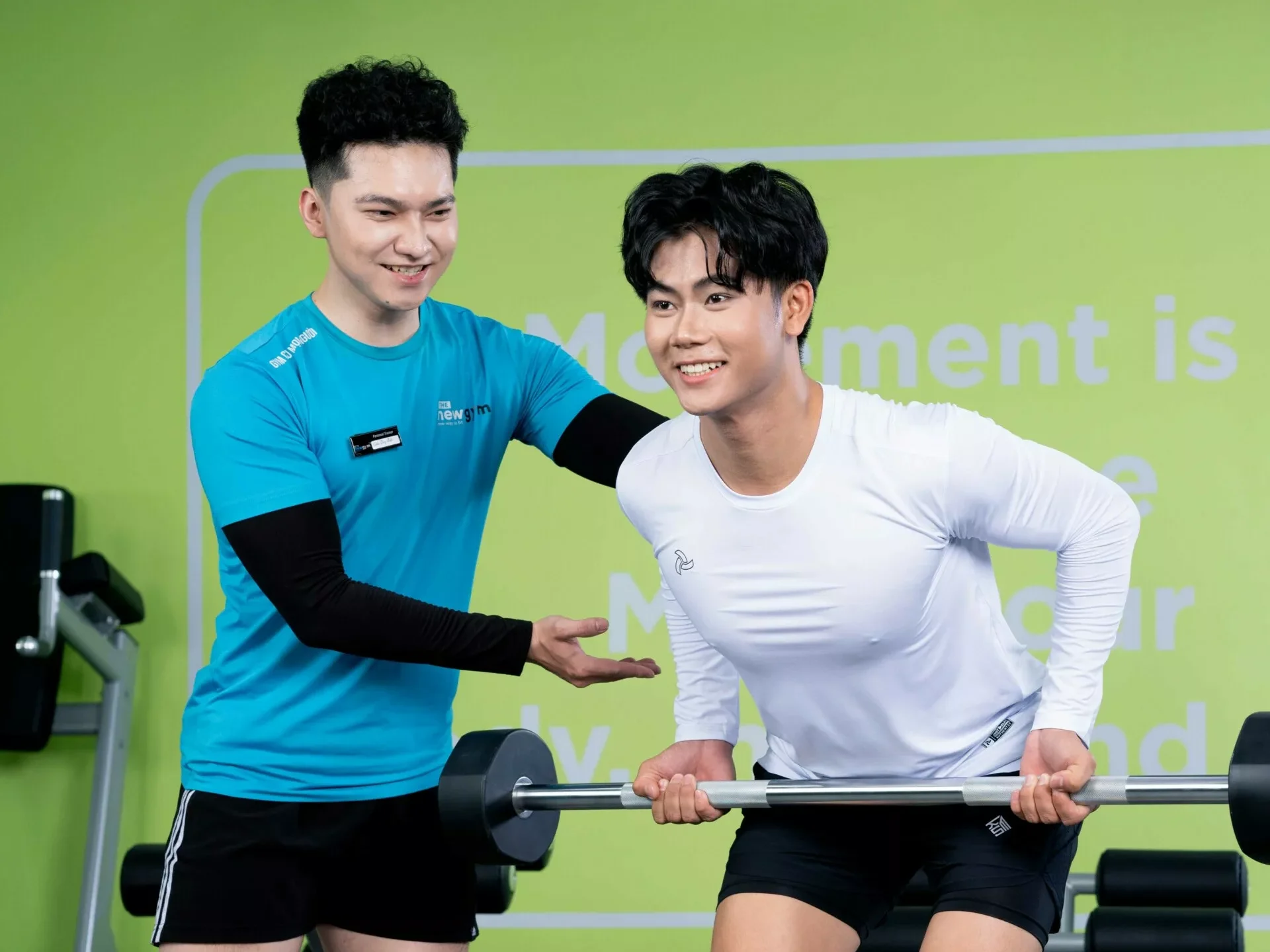
Get help from a trainer: A training habit is easier to build with professional support. If you’re not sure where to start, go to a gym with trainers ready to help you.
Frequency and Intensity for Beginners
Beginners should train a maximum of 3 sessions a week, 30 to 60 minutes each, and not train the same muscle group on 2 consecutive days.
This is something many people get wrong. Muscles don’t grow while you train, but while you rest between sessions.
A randomised controlled trial by Tanriverdi et al. (2025) followed 41 men who had never lifted weights for 8 weeks, split into three groups training 2, 3 and 4 times a week with the same total volume. All three groups gained strength and improved their body composition to a similar degree. In other words, you don’t need more sessions to progress faster, as long as your total weekly volume is enough.
Beyond frequency, a suitable plan needs four more things:
Personalised to your goal: a fat-loss plan differs from a muscle-building plan, so everything should start from your specific goal.
Balanced muscle groups: your upper body, lower body and core all need training, avoiding training one area unevenly.
Enough recovery time: at least 1 to 2 rest days a week, and 48 hours between two sessions for the same muscle group.
Progressive overload: every 1 to 2 weeks, slightly increase the weight, reps or sets so your body keeps adapting.
The most common beginner schedule is Monday, Wednesday, Friday or Tuesday, Thursday, Saturday. After 1 to 2 months, once your body has adapted, you can consider increasing to 4 or 5 sessions.
As for length, 30 to 60 minutes per session is enough in the early stage. On the other hand, training for 2 hours from the first week usually leads to lasting soreness and then quitting.
How to Choose Your Weight for Your First Session
Beginners should choose a weight that lets them do 12–15 reps with good form while still having 2–3 reps left in them.
If by rep 8 you have to strain or change your posture to lift it, the weight is too heavy. On the other hand, if you finish all 15 reps without feeling tired, go up a step next session.
In the first week, train at about 50–60% effort and leave the gym feeling you could still do more, not exhausted. For free exercises like Squats and Lunges, bodyweight alone is enough in the first week.
What Zones Does a Gym Have?
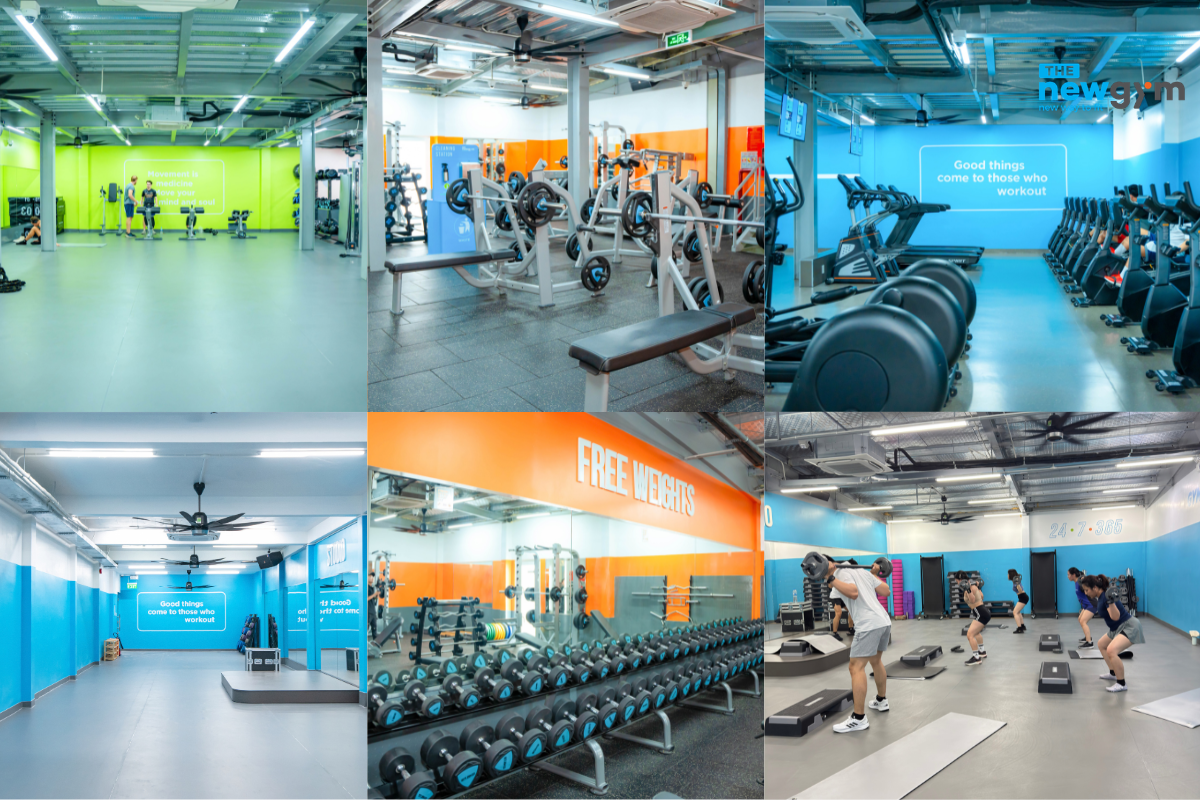
A gym is usually divided into 5 zones: Cardio, Strength, Free Weight, Functional Training and a Studio.
Knowing where each zone is in advance helps you feel less awkward in your first session, which is what puts most people off when they first walk into a gym.
Cardio zone: treadmills, exercise bikes, ellipticals and stair climbers. This is usually where beginners start, because the machines are easy to use and low risk.
Strength zone: machines for each muscle group with fixed paths, so you can learn movements safely before moving to free weights.
Free Weight zone: dumbbells, barbells, plates, benches and squat racks. This zone demands the most technique.
Functional Training zone: an open space with kettlebells, resistance bands, plyo boxes and mats.
Studio: a separate room for group classes on a fixed schedule.
When you first sign up, staff or a trainer will show you around. This is the best time to ask any questions about using the equipment, so don’t be shy about asking.
3 Tips for Your First Session at the Gym
Three tips for your first session: get used to the treadmill, ask a trainer for help, and try the weight machines at their lightest setting.
Your first session should only have 3 to 4 exercises at a light intensity, because the goal now is to get familiar, not to train hard. Going slowly helps your body adapt and limits soreness the next day, which is why many people skip their second session.
Get used to the treadmill: Walking on the treadmill is the most comfortable way to start. A nice bonus is that you can move while listening to a podcast or watching your favourite show. Once you’re comfortable, try the elliptical or stationary bike.
Don’t be afraid to ask for guidance: Trainers are a great resource for asking questions and building confidence. At The New Gym, our trainers are always happy to guide you through your first sessions.
Get familiar with the weight machines gradually: Feeling overwhelmed by all the machines is very common. So start with the lowest weight on each machine and do low reps for the first few sessions to see how your body responds. The leg press and lat pulldown are the two most accessible options.
If you want guidance from your very first session, the Class For Beginners at The New Gym is designed especially for people who have never used gym machines. On top of that, more than 11 other group classes at The New Gym are free for members, from gentle Yoga to high-intensity New Combat.
A 3-Session Plan for Your First Week
The first-week plan has 3 sessions: 1 cardio familiarisation session, 1 lower body session and 1 upper body and core session.
| Session | Content | Length |
|---|---|---|
| Session 1 | Cardio familiarisation: treadmill, bike or stair climber | 20–25 minutes |
| Session 2 | Lower body: Box Squat, Lunge, Glute Bridge, Calf Raise | 40–50 minutes |
| Session 3 | Upper body and core: Lat Pulldown, Dumbbell Chest Press, Shoulder Press, High Plank | 40–50 minutes |
Before each session, warm up for 5–10 minutes with 10 dynamic stretches. At the end, walk slowly for 5 minutes and lightly stretch the muscles you trained.
Session 1: Cardio Familiarisation
Choose the treadmill, bike or stair climber and walk briskly or pedal slowly for 20–25 minutes. Keep a pace where you can still speak in sentences; if you’re gasping mid-sentence, you’re overdoing it. This session gets your body used to continuous movement and you used to the gym space.

Session 2: Lower Body
Box Squat
Place a chair or box behind you and stand with feet shoulder-width apart, toes turned slightly out. Lower yourself slowly as if sitting down on the chair, touch it lightly, then stand up. The chair shows you exactly how low to go, so this is a safe Squat variation for beginners.
Common mistake: knees caving in as you stand up. Actively push your knees out in line with your toes.
3 sets × 12 reps, bodyweight only in the first week.
Lunge
Stand tall, step one leg forward, lower yourself until your back knee almost touches the floor, then push through your front foot to return. Keep your torso upright without leaning forward. A detailed guide is in our Lunges article.
Common mistake: stepping too short so your front knee goes past your toes. Stepping a little longer fixes it.
3 sets × 10 reps per leg, holding a wall if you can’t keep your balance yet.
Glute Bridge
Lie on your back with your knees bent and feet flat about a hand’s span from your glutes. Squeeze your glutes and lift your hips until your upper body and thighs form a straight line, then lower slowly. Detailed technique is in our Glute Bridge guide.
Common mistake: pushing with your lower back instead of your glutes. If your back tires instead of your glutes, brace your abs before lifting.
3 sets × 15 reps.
Calf Raise
Stand tall, lightly holding a wall, raise your heels as high as you can, hold for 1 second, then lower slowly. When it gets easy, switch to one leg.
Common mistake: bouncing quickly for momentum. Hold for 1 second at the top so your calves do the work.
3 sets × 20 reps.
Session 3: Upper Body and Core
Lat Pulldown
Sit at the machine, tighten the thigh pad and grip the bar wider than your shoulders. Pull the bar down to chest level, elbows pointing down, then let it rise slowly. A detailed guide is in our Lat Pulldown article.
Common mistake: pulling with your arms and leaning back for momentum. Think about driving your elbows down, and the load will go into your back.
3 sets × 12 reps.
Dumbbell Chest Press
Lie on your back on a bench holding dumbbells at chest level. Press the weights up until your arms are almost straight, then lower slowly until your elbows are level with your body. If you’re torn between dumbbells and a machine, see our comparison of Bench Press vs the Chest Press machine.
Common mistake: lowering too deep so your shoulders get overstretched. Stopping when your elbows are level with your body is enough.
3 sets × 12 reps.
Shoulder Press
Sit up straight holding dumbbells at ear level, elbows bent at 90 degrees. Press the weights up, then lower slowly to the start. A detailed guide is in our Shoulder Press article.
Common mistake: arching your back as you press. Brace your abs throughout, and lower the weight if you still arch.
3 sets × 10 reps.
High Plank
Place your hands straight under your shoulders and extend your legs behind you, your body in a straight line from head to heels. Squeeze your abs and glutes, neck relaxed and eyes on the floor.
Common mistake: hips sagging or piking up. If you can’t hold it straight, drop your knees to the floor and hold for less time.
Hold 20–30 seconds × 3 times.
4 Foundational Exercises at Home
The four foundational home exercises are the Push Up for chest and shoulders, the Squat for thighs and glutes, the Pull Up for back and biceps, and the Crunch for abs.
They’re called foundational because each one works several muscle groups at once. A complete session also needs to cover the three movement groups of pushing, pulling and legs, and these four cover all three, plus the core.
If you’re not ready for a full session, you can start with a few small movement habits: stretching or doing Squats and Lunges while watching TV, getting up and walking around during long phone calls, and walking around your neighbourhood when the weather is nice. These small movements add up and help your body get used to being active.
In the first-week plan above, bodyweight Squats, Lunges and Glute Bridges can all be done at home, and kneeling Push Ups can replace the Chest Press. Only the Lat Pulldown and Shoulder Press need machines. At home you can use resistance bands instead, but the feel and load will be quite different.
1. Push Up
Lie face down with your legs together and your palms flat on the floor just under your shoulders, beside your chest. When ready, brace your abs and push yourself up with your arms, keeping your back straight.
Avoid hunching your shoulders or dropping your head too low. If it’s too hard, you can do it on your knees to reduce the load.

2. Squat
Stand with your feet slightly wider than your shoulders, toes turned slightly out. Keep your chest and head up, then slowly lower yourself as if sitting into an invisible chair until your thighs are parallel to the floor.
Make sure your knees move in the same direction as your toes and don’t cave in.
3. Pull Up
Grip the bar with your palms facing toward you or away from you. From here, pull your body up as high as you can and try to get your chin over the bar. Cross your legs and brace your abs to stay stable.
This is the hardest of the four exercises, so don’t hesitate to use a chair or resistance band for assistance at first.
4. Crunch
Lie on your back with your knees bent and feet flat on the floor. Place your hands beside your head, not clasped behind your neck.
Use your abs to lift your upper body slowly and with control, then lower slowly.
The First 8 Weeks
The 8-week plan has 3 phases: getting familiar in weeks 1–2, gradually increasing the weight in weeks 3–4, and splitting muscle groups in weeks 5–8.
| Phase | Frequency | Focus | Sets × reps for the 4 home exercises |
|---|---|---|---|
| Weeks 1–2 | 3 sessions | Get familiar with the machines and positions following the first-week plan, light weights or bodyweight | Push Up 3 × 5–8 · Squat 3 × 10 · Pull Up 3 × 1–3 · Crunch 3 × 10–12 |
| Weeks 3–4 | 3 sessions | Keep the same exercises and gradually increase the weight once your form is solid | Push Up 3 × 8–12 · Squat 3 × 12–15 · Pull Up 3 × 3–5 · Crunch 3 × 15–20 |
| Weeks 5–8 | 3–4 sessions | Split muscle groups into Upper and Lower or Push, Pull, Legs. Add the Bench Press and Deadlift once you’ve mastered the exercises above | Increase gradually following the principle of progressive overload |
The focus of weeks 1–2 is clean form, not high reps. After 8 weeks, you’ll have a solid enough foundation to build a plan around your own goals.
Muscle Soreness After Your First Sessions
Muscle soreness appearing 24–48 hours after training is normal, called DOMS, and usually eases after 3–4 days.
With mild to moderate soreness you can keep training; just lower the intensity or switch to a different muscle group. If it hurts so much it’s hard to walk, rest for 1–2 days, walk lightly and stretch, then go back to training. What to avoid is resting for a whole week, because that’s when the habit is easily abandoned. How to relieve muscle soreness is covered in detail in What is DOMS.
5 Common Beginner Mistakes
The five mistakes are setting overly ambitious goals, sacrificing form for reps, holding your breath during effort, skipping rest days and not tracking progress.
These are the most common reasons beginners quit in the first 4 to 8 weeks.
Setting Overly Ambitious Goals
Many people schedule 5 to 6 sessions a week from the start because they want quick results. But their body isn’t used to it, so they easily burn out and quit after 2 to 3 weeks.
The fix is to start with 3 sessions for the first 4 to 6 weeks, then build up gradually.
Sacrificing Form for Higher Reps
This is the most serious mistake, especially in Squats and Push Ups. Beginners often keep their hips too high in Squats or let their back sag in Push Ups to squeeze out a few more reps.
Train in front of a mirror or film yourself to check your form.
Holding Your Breath During Effort
This is a natural reflex but causes a sudden rise in blood pressure, and it’s especially dangerous in Squats and Pull Ups.
Instead, breathe out during the effort, when pushing up in a Push Up or standing up in a Squat, and breathe in as you lower yourself.
Skipping Rest Days
Some people find the schedule light and add extra training on rest days to speed things up. But muscles grow during rest, so skipping rest days means slower progress.
A rest day doesn’t mean lying still. You can still walk lightly or stretch.

Not Tracking Progress
If you train without keeping records, you won’t know how this week compares with last week, and it’s easy to stay at the same weight for months.
Record your sets, reps and weights in a notebook or app, and every 2 weeks try to increase one of those three numbers.
When Should You Ask a Doctor?
Get a doctor’s assessment before starting to train if you have heart disease, high blood pressure, an unhealed bone or joint injury, are pregnant or have recently given birth, are over 60 and have never trained, or have an underlying condition such as diabetes or asthma.
While training, stop and see a doctor if you notice any of the following signs:
- Chest pain or lasting shortness of breath.
- Severe joint pain, completely different from muscle fatigue.
- Continuous dizziness or nausea.
- Numbness in your arms or legs not caused by your position.

Frequently Asked Questions
1. How many times a week should beginners go to the gym?
Start with 2 to 3 sessions a week, about 30 to 60 minutes each. This gives your body enough time to recover and helps you build a lasting habit. Once you’re used to it after a few weeks, you can gradually increase to 3 to 4 sessions.
2. What should you do on your first day at the gym?
Your first session should be gentle: start with 10 to 15 minutes of cardio like walking on the treadmill to get familiar, then try a few machines at their lightest weight. Prioritise learning proper form over training hard.
3. Do beginners need to hire a PT?
It’s not required, but a few PT sessions at the start are very useful for learning proper technique and avoiding injury. If your budget is limited, you can ask gym staff to show you how to use the machines.
4. How long until you see results?
Feeling stronger, less out of breath and sleeping better usually comes after 2 to 4 weeks of training consistently 3 times a week. Clear changes in your physique take 8 to 12 weeks and depend heavily on eating enough protein.
4. Should beginners lift weights straight away?
Yes, but with light weights. Lifting light weights with good form makes your muscles and bones stronger than cardio alone. What to avoid is heavy weights from the start, not weight training itself.
5. Can women do these exercises?
Yes, and they should. Getting big muscles quickly takes years of heavy training plus eating in a surplus, so with the first-week plan and light weights, women just get more toned, not bulky.
6. Are pull-ups a beginner exercise?
Not yet. Most beginners can’t do a single rep, so the Lat Pulldown is better for training the same back muscles. You can move on to pull-ups once you can pull about 40–50% of your body weight on the Lat Pulldown.
7. Is it better to train alone or in classes?
Group classes have the advantage of direct form coaching and a ready-made pace. If you prefer to control your own time, train alone following the first-week plan above. A detailed comparison is in should beginners train alone or join group classes.
References
- Tanriverdi, C., et al. (2025). Comparison of resistance training frequencies (2, 3, and 4 days/week) on strength, body composition, and anthropometric measures in untrained young men: An equal-set, intensity-matched randomized controlled trial. Journal of Physical Education and Sport, 25(9). https://efsupit.ro/images/stories/september2025/Art%20213.pdf
🌱Articles on gym beginners
A collection of 47 articles about gym beginners, ordered by how often they are read.
- What Is a Gymer? 13 Rules and Tips Every Gym-Goer Should Know
- Gym for Women: A Training Guide for Female Beginners
- Standard Gym Rules: 10 Regulations and 6 Etiquette Tips for Gym-Goers
- What Is Fitness? Building a Gym Plan with 6 Types of Fitness
- 5 foundational gym basics that will completely banish your fears
- Basic gym machines for beginners
- What to wear to the gym? How male and female beginners can choose gym clothes
- Upper Body Exercises for Beginners
- What Are Free Weights? Free Weights vs Bodyweight for Newbies
- A Guide to Lifting Weights for Weight Loss for Beginners
- What is a rep? What is a set? How to choose reps and sets for your goal
- At what age should you start going to the gym? A guide for every age
See 35 more articles ▾
- 4 Health Measuring Devices to Track Your Fitness Journey
- A gym near home or working out at home?
- 6 Smith machine exercises for beginners: a full-body workout on one machine
- 5 FITNESS-BOOSTING GYM MOVES SUITABLE FOR EVERYONE
- A 3-day-a-week gym plan for beginners
- Quick Fixes for 6 Common Gym Mistakes
- Top 5 Best Resistance Machines for First-Time Gym-Goers
- An Expert Answers the 5 ‘Hottest’ Gym Questions
- Common Gym Equipment and What Each Is For
- When Should You Replace Your Gym Clothes? 4 Signs to Know
- 12 weight training exercises for beginners with dumbbells, barbells and machines
- What Women New to the Gym Need to Prepare
- Returning to the gym after a long break: how your body changes and how to restart
- Top 5 criteria for choosing the right gym membership for beginners
- 5 frequently asked gym questions
- A Detailed Guide to Choosing the Right Training Shoes for You
- A 30-Minute Gym Machine Plan for Beginners
- How Long Should Beginners Train Each Session?
- A 5-minute fitness test: is your body fit or weak?
- A checklist of 10 gym safety techniques you need to know to avoid injury
- 5 cases when you should invest in proper gym shoes
- How to Choose the Right Gym Leggings
- Weight Training for Beginners: 4 Safe and Effective Barbell Plans
- What to Bring to the Gym? A Checklist of 6+ Essentials for Beginners
- Return to the Gym with This Safe Re-entry Guide
- Gym Terms A-Z: 50+ Words for Beginners
- Choosing the Right Gym Top for Women: The Perfect ‘Bodyguard’ for Your Bust
- 6 Safe Training Tips for Beginners
- 6 Simple, Effective Steps to Build Your Fitness
- Lifting Weights Properly: How Beginners Choose the Right Weight
- How to use the equipment at The New Gym
- Proper breathing technique when lifting weights
About The New Gym
The New Gym is a chain of gyms with 15 locations nationwide, most open 24/7. For just 299,000 VND/month, you can train freely at any location in the chain. The New Gym follows the philosophy of “Gym for everyone”, creating a friendly training environment that suits everyone.
📞 Hotline: 1900 63 69 20
📌 Facebook: facebook.com/thenewgymvietnam
💬 Zalo: zalo.me/4267108480570109866


