14 Glute Exercises for Beginners at Home and at the Gym
Effective glute training combines hip extension exercises such as the Glute Bridge and Hip Thrust with hip abduction exercises such as the Clamshell and Fire Hydrant, and beginners should start with bodyweight exercises at home before moving on to weights at the gym.
The glutes are made up of three muscles with different functions, so a session with only Squats usually does not reach all three. This article splits 14 exercises into two groups: 7 exercises at home with no equipment, and 7 exercises with weights, cable machines or resistance bands at the gym.
If you are just starting out, you can spend the first 4 weeks on the home exercises to get used to the feeling of squeezing your glutes, then gradually move on to weighted exercises following the plan at the end of the article.
Which muscles make up the glutes?
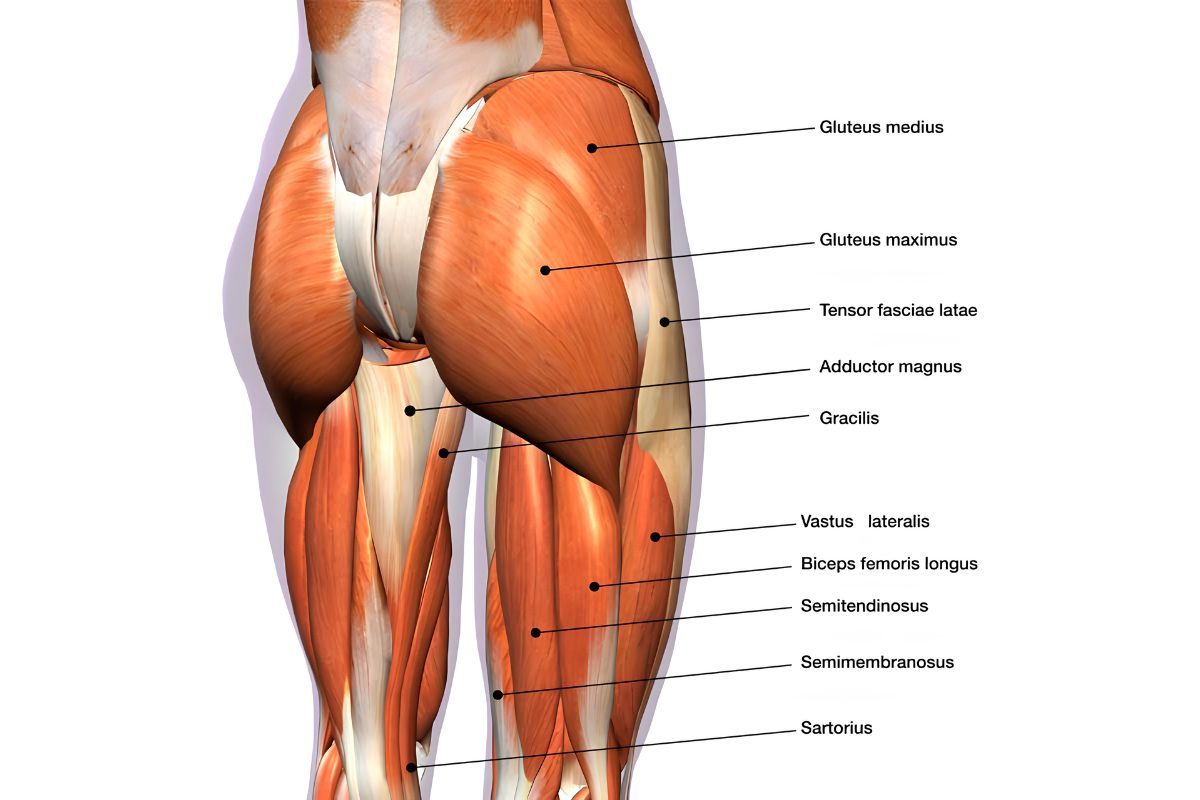
The glutes consist of three main muscles, the gluteus maximus, gluteus medius and gluteus minimus, each responsible for a different movement of the hip joint.
Gluteus maximus: the largest muscle, responsible for extending the hip when you stand up, climb stairs or push your hips forward.
Gluteus medius: located on the side of the hip, it keeps the pelvis balanced when you stand on one leg and moves the leg out to the side.
Gluteus minimus: lies deep under the gluteus medius and assists with moving the leg out to the side and rotating the hip.
The location and function of each muscle are explained in detail in our Glute Bridge guide. If you want to train your quads, hamstrings and calves in the same session, check out our leg exercises at the gym.
Benefits of Training Your Glutes
Training your glutes improves posture, keeps your knees aligned, increases power when running and jumping, and reduces the load on your lower back.
Better posture: strong glutes help keep the pelvis and spine in a neutral position.
Keeping your knees aligned: the gluteus medius on the side of the hip stops your thighs caving inward when walking, running and squatting. This benefit is often overlooked when people only train hip extension.
Better athletic performance: supports running, jumping and lifting heavy objects.
Easier daily life: standing up from a chair, climbing stairs and carrying things all involve hip extension.
A study by Cooper et al. (2016) in the European Spine Journal compared 150 people with chronic lower back pain with 75 healthy people, and found that the gluteus medius was significantly weaker in the back pain group. However, this was an observational study, so it does not prove that weak glutes cause back pain. Glute training should therefore be seen as part of a programme for a healthy back, not a substitute for a diagnosis if you have long-lasting back pain.
3 Types of Glute Exercises: Activation, Compound, Isolation
Each glute session should include all three types: activation exercises to warm up, compound exercises to build strength, and isolation exercises to focus on the glutes.
Type
Goal
Exercises in this list
Place in the session
Activation
Warms up the gluteus medius and minimus and helps you feel the muscles better
Clamshell, Fire Hydrant, Banded Abduction
Start of the session, 1–2 exercises
Compound
Builds strength for both the glutes and thighs
Bodyweight Squat, Romanian Deadlift, Bulgarian Split Squat, Step Up, Walking Lunge, Side Lunge
Middle of the session, while you are still fresh
Isolation
Focuses the work on the glutes and limits thigh involvement
For beginners, choosing 1 activation exercise, 1–2 compound exercises and 1–2 isolation exercises per session is enough.
Glute Exercises at Home for Beginners
The seven no-equipment glute exercises at home are the Glute Bridge, Bodyweight Squat, Donkey Kick, Fire Hydrant, Clamshell, Side Lunge and Frog Pump.
These exercises only need a mat and suit the first 4 weeks while you are getting used to squeezing your glutes. Lunges, Step Ups and Bulgarian Split Squats can also be done at home without weights, but they are covered in the gym section because the weighted versions are more effective in the long run. If you want a session with a ready-made order of exercises, you can use the plan at the end of the article.
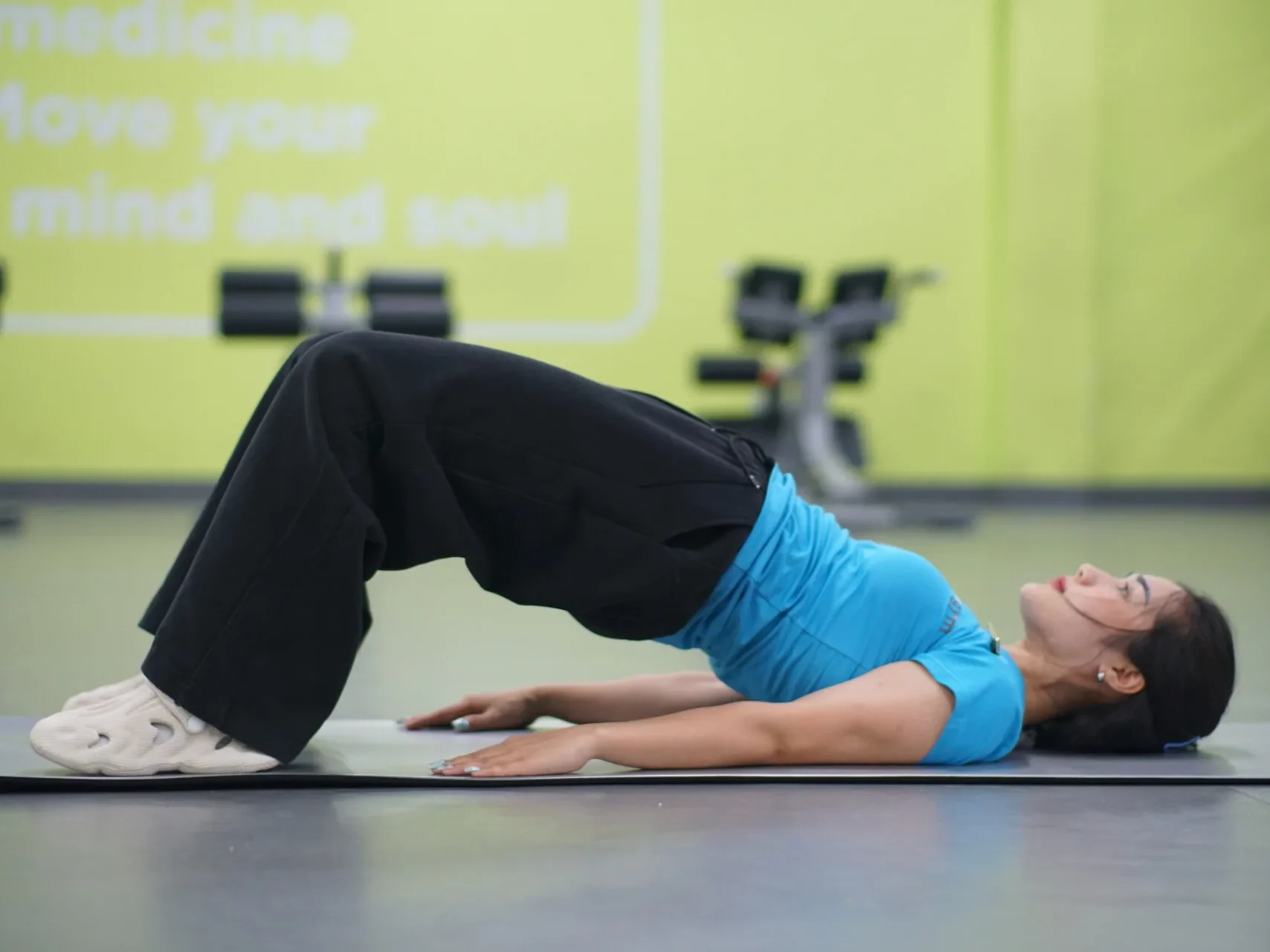
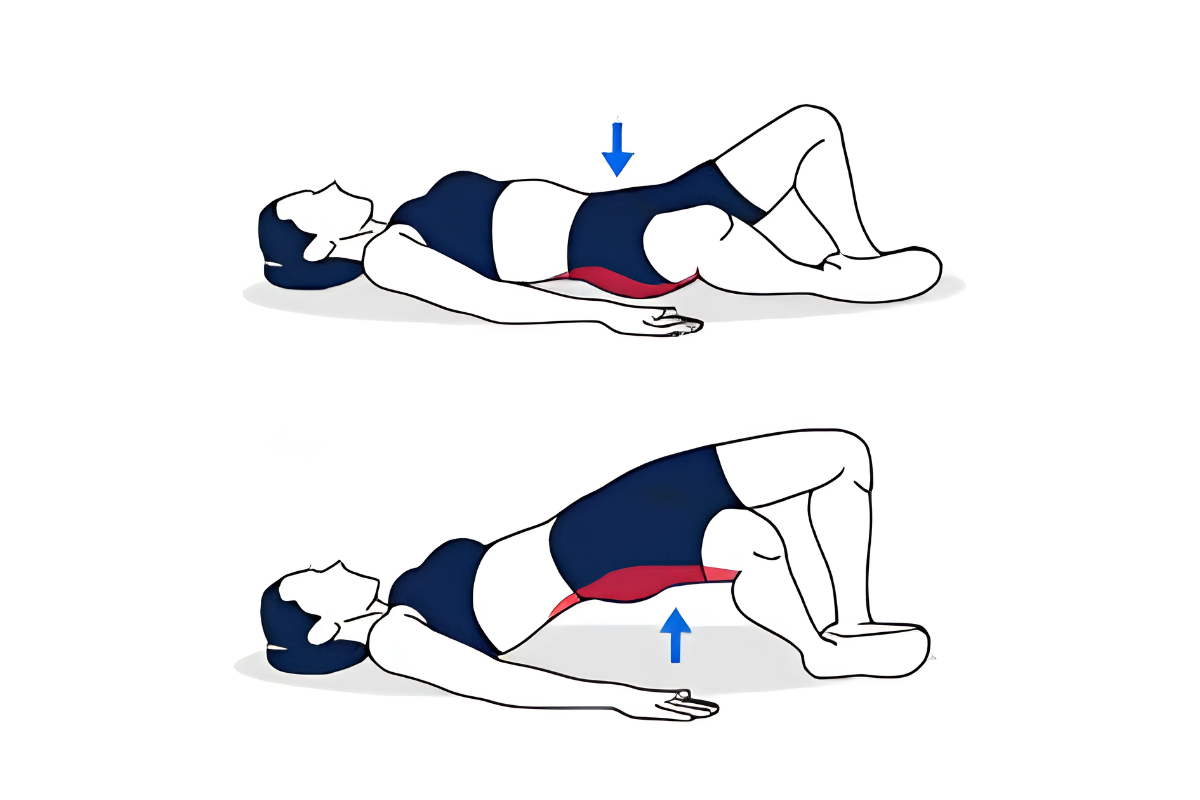
1. Glute Bridge
Main muscles worked: gluteus maximus, plus the hamstrings.
Lie on your back with your knees bent and both feet flat on the floor, hip-width apart.
Squeeze your glutes and push your hips up until your shoulders, hips and knees form a straight line.
Hold for 1–2 seconds at the top, then lower your hips slowly.
2. Bodyweight Squat
Main muscles worked: gluteus maximus, plus the quads and hamstrings.
Stand with your feet shoulder-width apart, toes turned slightly out.
Push your hips back and lower your body as if sitting on a chair, keeping your back straight.
Lower until your thighs are parallel to the floor, then push through your heels to stand up.
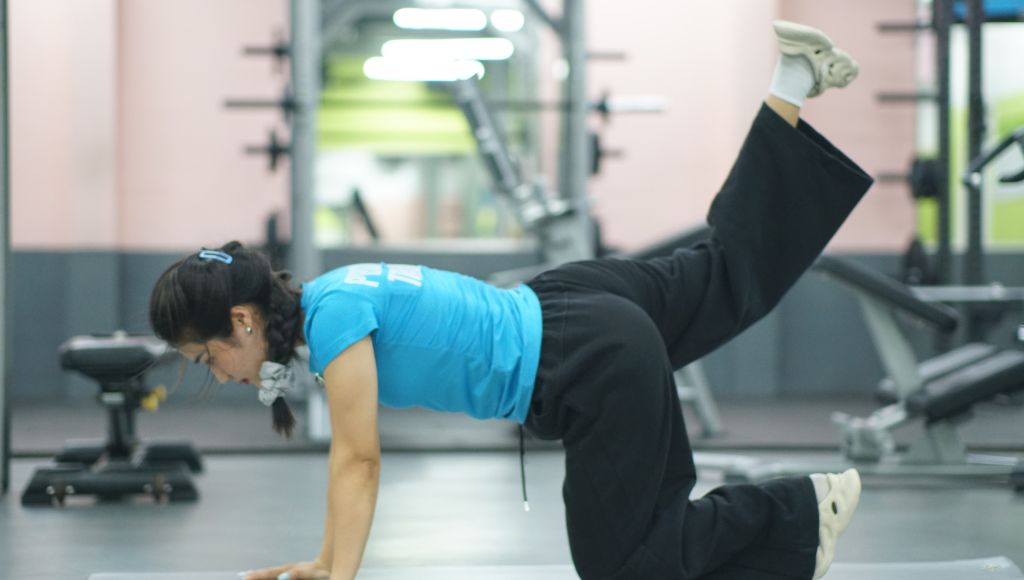
3. Donkey Kicks
Main muscles worked: gluteus maximus.
Get on your hands and knees on a mat, hands under your shoulders and knees under your hips.
Keeping your knee bent at 90 degrees, kick one leg up towards the ceiling until your thigh is parallel to the floor.
Squeeze your glutes at the top, lower your leg slowly and repeat, then switch sides.
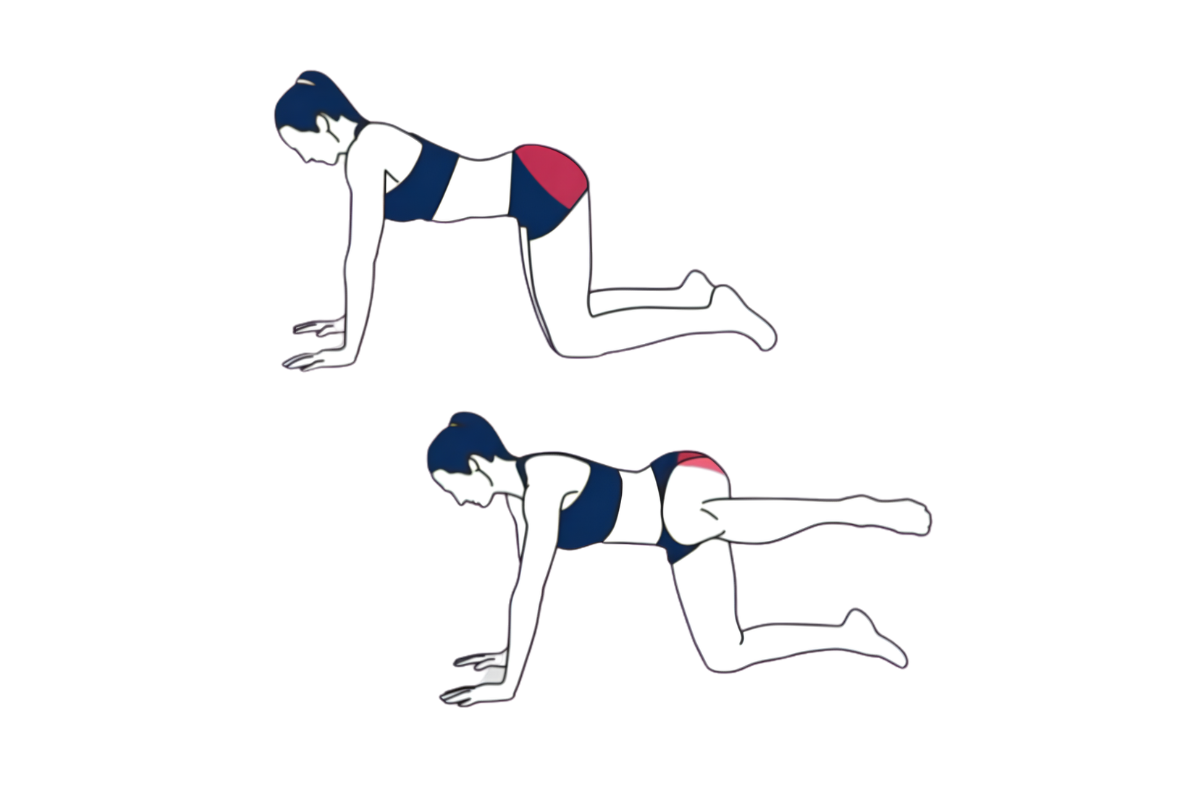
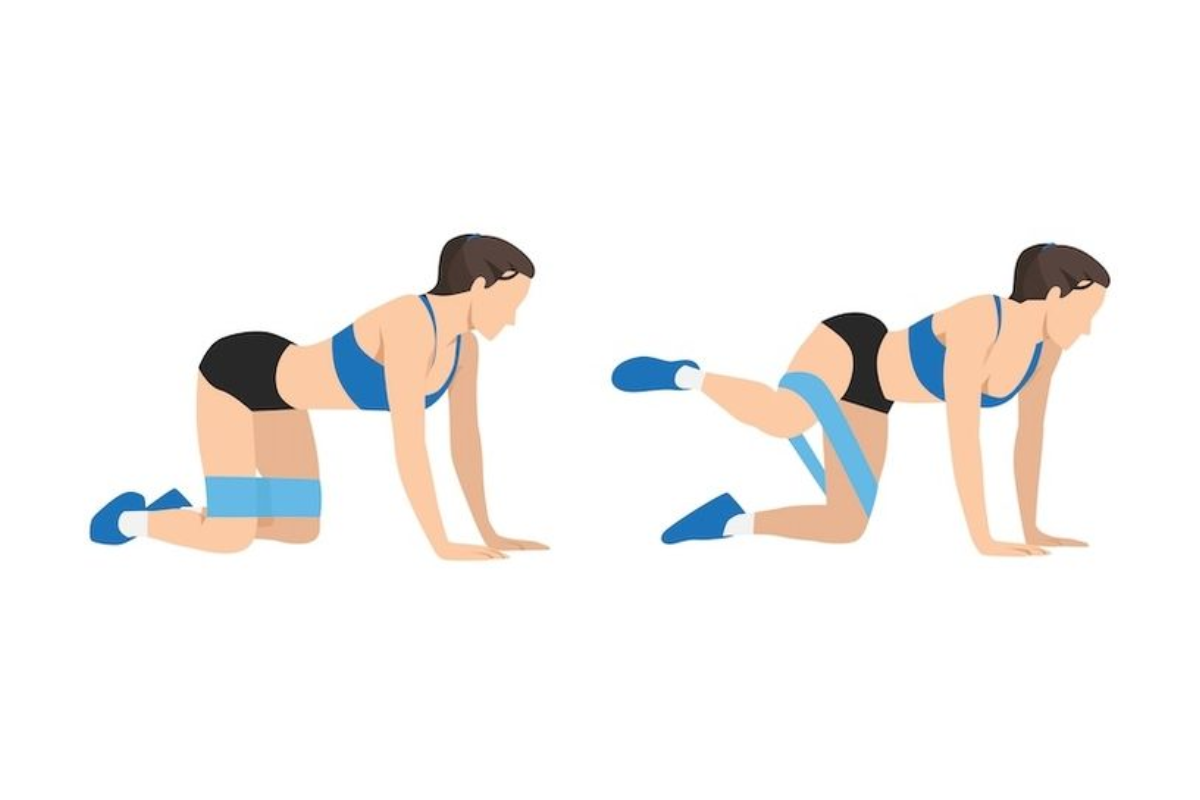
4. Fire Hydrants
Main muscles worked: gluteus medius and minimus.
Get on your hands and knees as in the Donkey Kick.
Keeping your knee bent, lift one leg out to the side until your thigh is almost parallel to the floor.
Lower your leg slowly without letting your hips tilt with it, then switch sides.
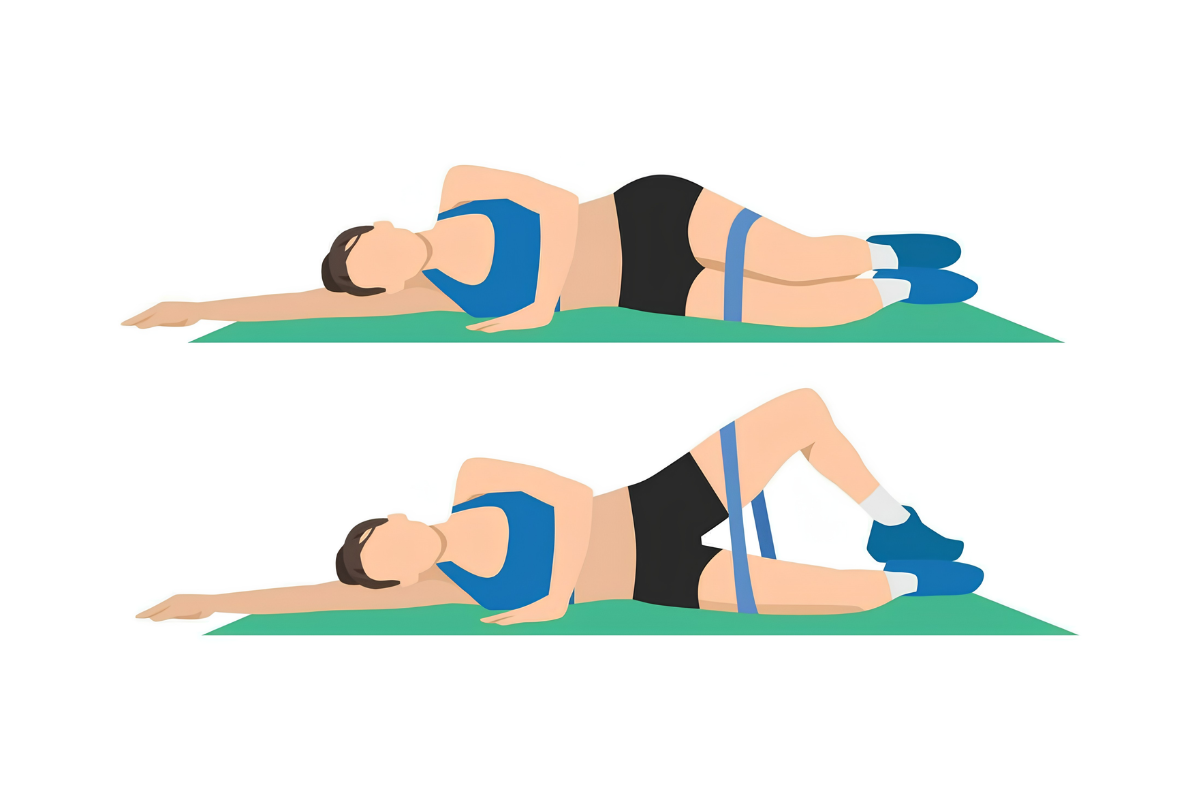
5. Clamshell
Main muscles worked: gluteus medius and minimus.
Lie on your side with your knees bent at about 45 degrees and your feet together.
Keeping your feet together, open your top knee like a clamshell opening.
Lower your knee slowly, keeping your hips from rolling back, then switch sides.
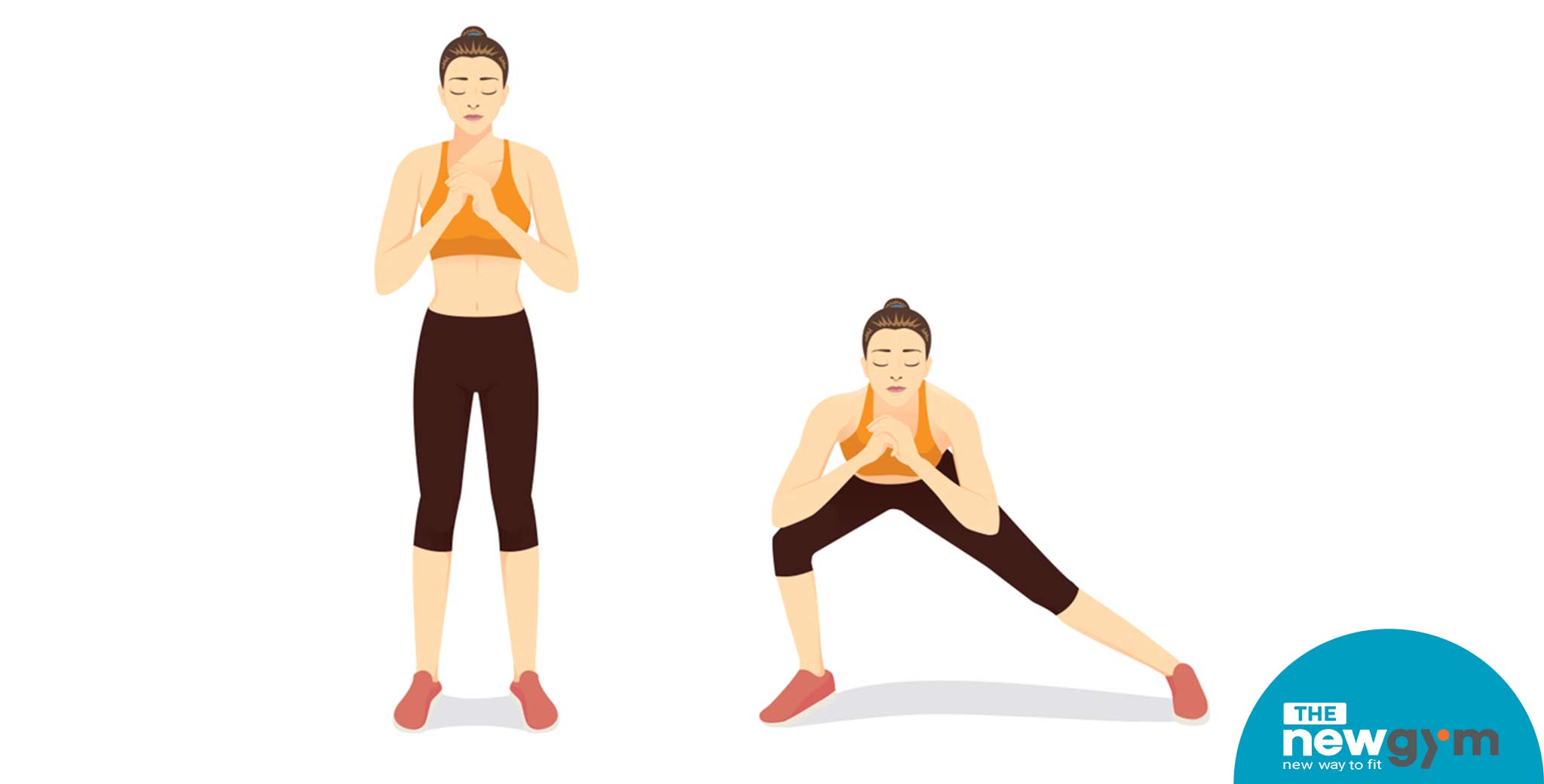
6. Side Lunges
Main muscles worked: gluteus maximus and medius, plus the inner thighs.
Stand with your feet together and your hands in front of your chest.
Take a wide step to the side, push your hips back and lower your body onto the stepping leg.
Keep the other leg straight, push through the heel of the stepping leg to return to standing, then switch sides.
7. Frog Pumps
Main muscles worked: gluteus maximus, plus the inner thighs.
Lie on your back with the soles of your feet pressed together and your knees open to the sides.
Push your hips up by squeezing your glutes, keeping the soles of your feet pressed together.
Lower your hips and repeat continuously at a fast pace.
Glute Exercises at the Gym
The seven glute exercises at the gym are the Barbell Hip Thrust, Romanian Deadlift, Bulgarian Split Squat, Step Up, Walking Lunge, Cable Kickback and Banded Abduction.
These exercises use barbells, dumbbells, cable machines or resistance bands, so you can increase the load every week, which is hard to do with bodyweight exercises. The sets and reps under each exercise are a starting point for beginners moving from home training.
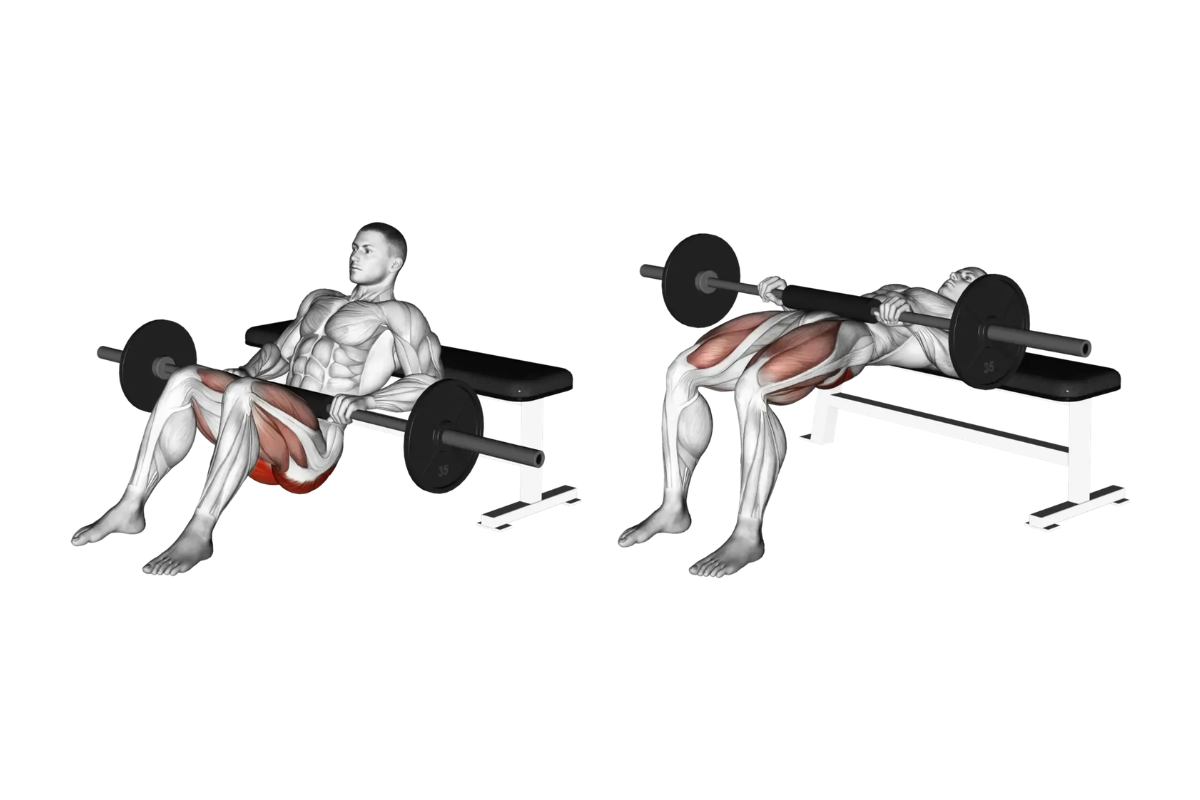
Rest your upper back (just below your shoulder blades) on a flat bench and place a barbell across your hips, ideally with a pad.
Place your feet shoulder-width apart so that your shins are vertical when your hips are up.
Squeeze your glutes and push your hips up until your torso is parallel to the floor, chin slightly tucked.
Hold for 1–2 seconds at the top, then lower slowly.
Beginners can do the first 2 weeks without weight, just with their back on the bench. Details on positioning and choosing the weight are in our Hip Thrust article.
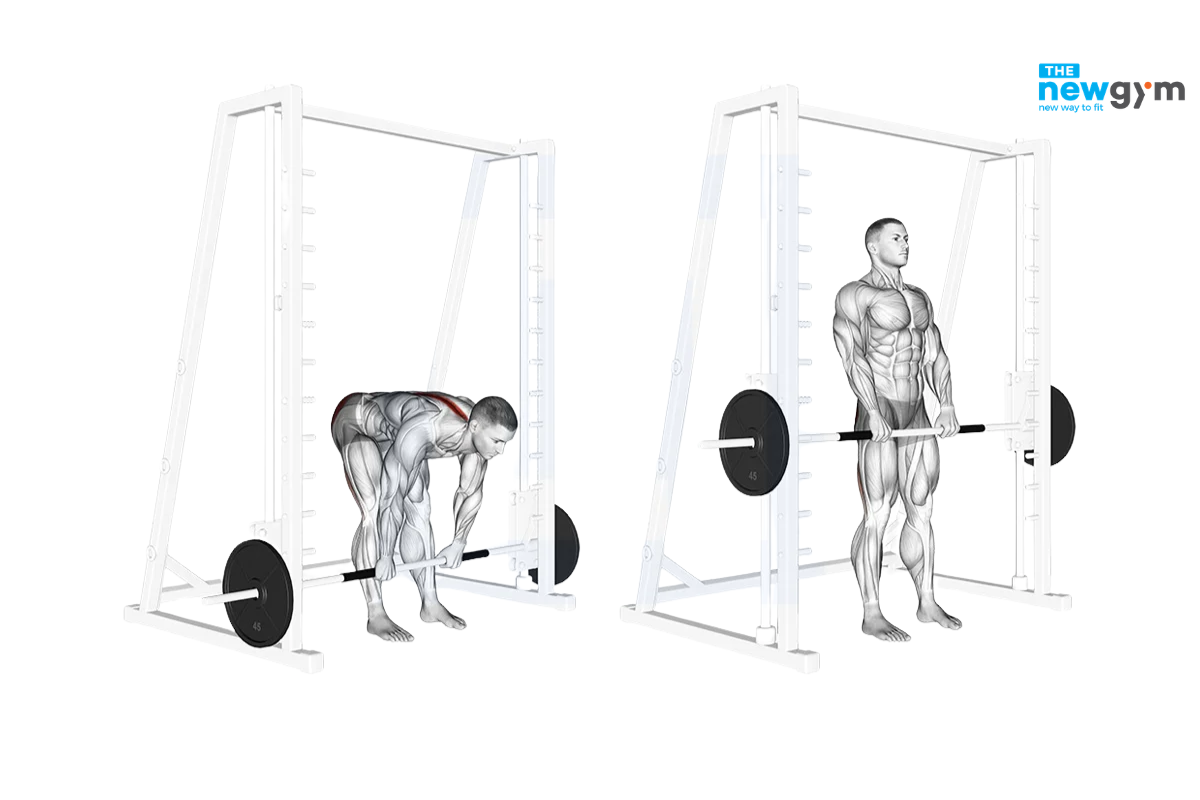
2. Romanian Deadlift
Main muscles worked: gluteus maximus, plus the hamstrings. Sets × reps: 3 × 10–12.
Stand tall with your feet hip-width apart, holding dumbbells or a barbell in front of your thighs.
Keep your back straight and knees slightly bent, and push your hips back to lower the weight along your legs.
Lower until you feel a stretch in your hamstrings, usually at or slightly below the knees.
Squeeze your glutes and drive your hips forward to stand back up.
At home, you can do the bodyweight Single-Leg Deadlift variation to train your balance too. Detailed technique is in our Romanian Deadlift guide.
3. Bulgarian Split Squat
Main muscles worked: gluteus maximus, plus the quads. Sets × reps: 3 × 10 per leg.
Stand with your back to a bench, rest the top of your back foot on it, and step your front foot about one stride forward.
Lean your torso slightly forward and lower your body until your front thigh is parallel to the floor.
Push through your front heel to stand up, keeping your front knee from caving in.
The bodyweight version can be done at home; once you are comfortable, hold a dumbbell in each hand. Detailed instructions are in our Bulgarian Split Squat article.
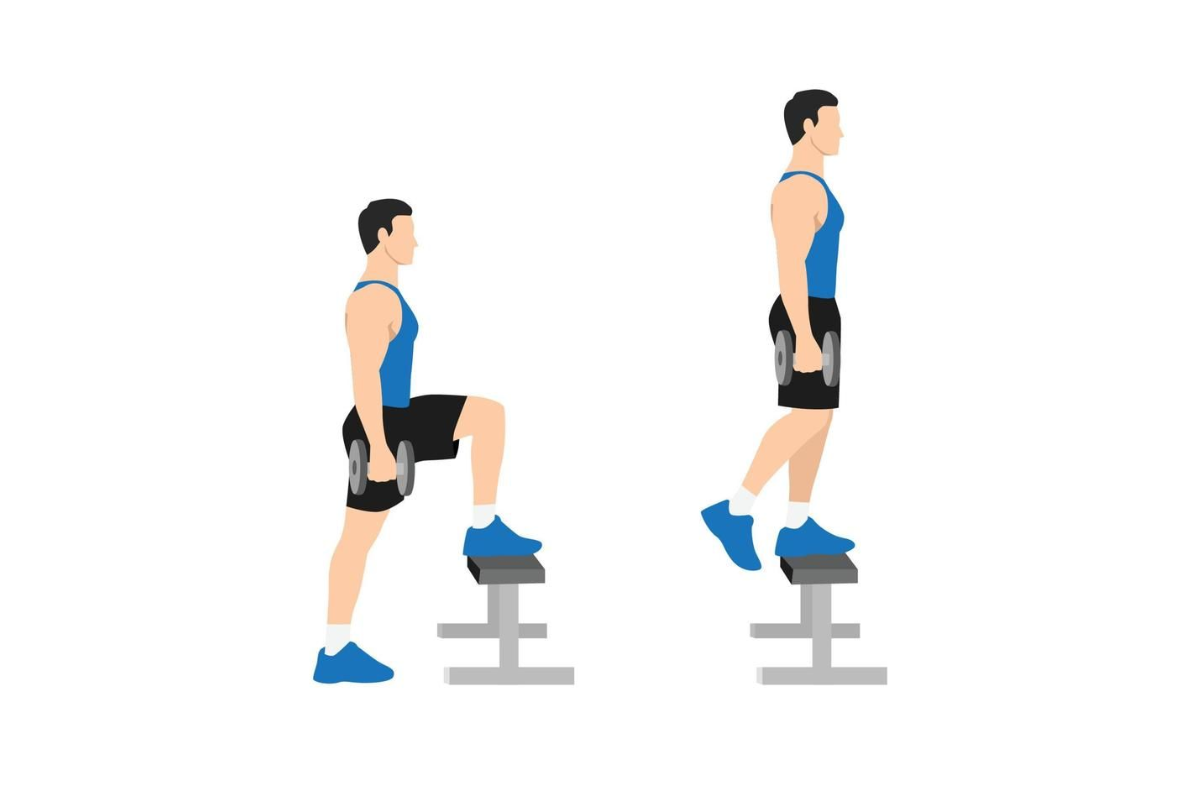
4. Step Up
Main muscles worked: gluteus maximus, plus the quads. Sets × reps: 3 × 10 per leg.
Stand in front of a sturdy box or bench about knee height, holding a dumbbell in each hand.
Place your whole foot on the box and push through that heel to stand up straight.
Lower the other leg slowly without bouncing off the bottom leg, then switch legs.
The higher the box, the more your glutes work. How to choose the box height is explained in our Step Up article.
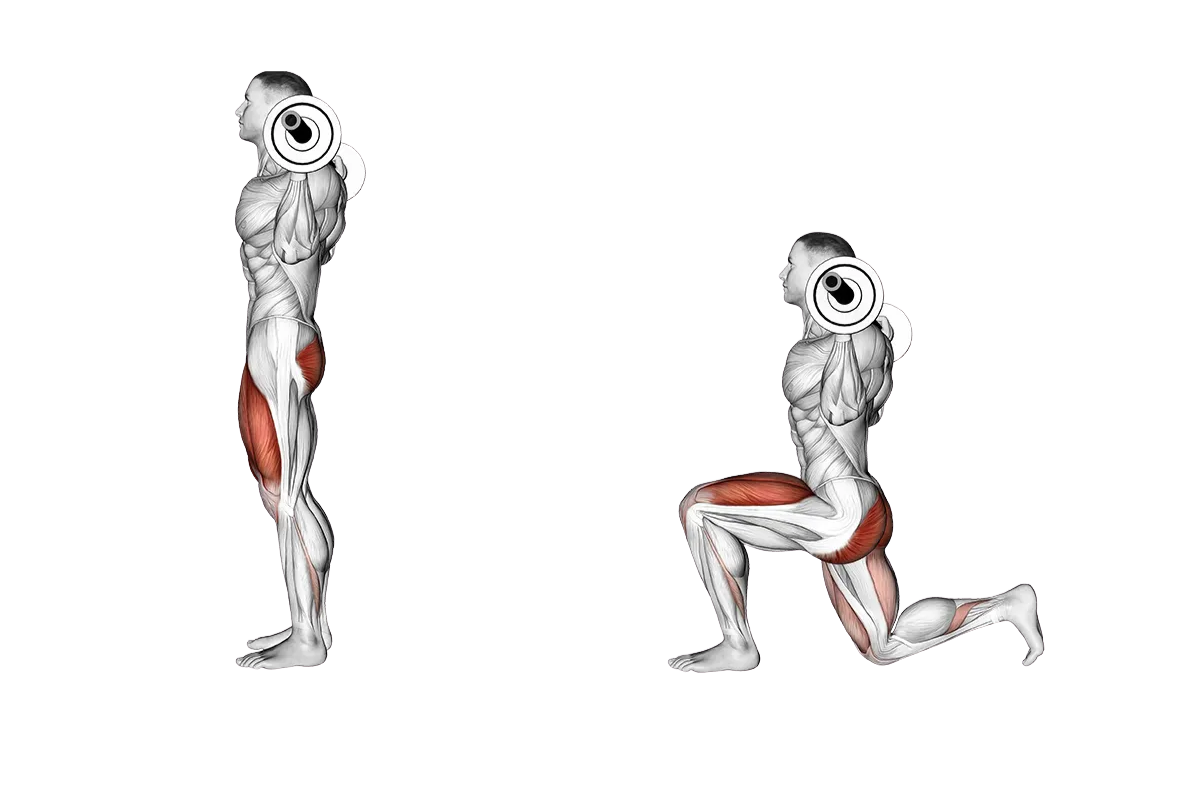
5. Walking Lunge
Main muscles worked: gluteus maximus, plus the quads and hamstrings. Sets × reps: 3 × 10 per leg.
Stand tall with a dumbbell in each hand, or with your hands on your hips if you are not using weights yet.
Take a long stride forward and lower your body until both knees are bent at about 90 degrees.
Push through your front heel to stand up while bringing your back foot forward, then continue with the other leg.
The stationary bodyweight version (Lunges) suits training at home. Detailed instructions are in our Lunges article.
6. Cable Kickback
Main muscles worked: gluteus maximus. Sets × reps: 3 × 12 per side.
Attach an ankle strap to the low pulley and wrap it around one ankle.
Stand facing the machine, holding the frame with both hands and leaning slightly forward.
Keeping your leg almost straight, kick it back by squeezing your glutes, without arching your back.
Bring your leg back slowly, then switch sides.
7. Banded Abduction
Main muscles worked: gluteus medius and minimus. Sets × reps: 2–3 × 15.
Sit on a bench or the edge of a box with a resistance band around your thighs, just above the knees.
Place your feet hip-width apart with your back straight.
Push your knees outward against the band, hold for 1 second, then bring them back together slowly.
This exercise is often used as an activation exercise at the start of a session.
Glute Training Plan for Beginners
Beginners can spend the first 4 weeks on bodyweight exercises at home, then from week 5 switch to 3 sessions a week at the gym.
Phase
Session
Exercises (sets × reps)
Weeks 1–4, at home
3 sessions a week, the same session each time
Clamshell 2 × 15 per side · Glute Bridge 3 × 15 · Bodyweight Squat 3 × 12 · Donkey Kick 2 × 12 per side · Fire Hydrant 2 × 12 per side
Week 5 onwards, at the gym
Session 1
Banded Abduction 2 × 15 · Romanian Deadlift 3 × 10–12 · Walking Lunge 3 × 10 per leg · Barbell Hip Thrust 3 × 12
Session 2
Clamshell 2 × 15 per side · Barbell Hip Thrust 4 × 10–12 · Step Up 3 × 10 per leg · Cable Kickback 3 × 12 per side
Session 3
Fire Hydrant 2 × 15 per side · Bulgarian Split Squat 3 × 10 per leg · Romanian Deadlift 3 × 10 · Frog Pump 3 × 20
Sessions should be at least 1 day apart, for example Monday, Wednesday and Friday. Start each session with a 5–10 minute light warm-up and rest 60–90 seconds between sets.
Frequency and Tips for Glute Training
Beginners should train their glutes 2–3 times a week, with 4–5 exercises per session that cover all three glute muscles.
In addition, include hip stretches to maintain flexibility and reduce stiffness as your muscles develop.
Will Glute Training Make Your Thighs Bigger?
Glute training can make your thighs bigger if the programme focuses heavily on Squats and quad exercises, but choosing the right exercises directs most of the work to your glutes.
Three principles for training your glutes while limiting thigh growth:
Use a wider stance when squatting: standing wider than shoulder-width gets your glutes more involved and reduces the load on your quads.
Prioritise the Hip Thrust and Glute Bridge: these isolate the glutes and put little load on the quads.
Avoid heavy Leg Extensions: this exercise isolates the quads, so training it heavy makes your thighs grow faster than your glutes.
A trial by Plotkin et al. (2023) in Frontiers in Physiology had untrained people train for 9 weeks with either Squats or Hip Thrusts. Glute growth was similar in both groups, but the Squat group’s quads and inner thighs grew more, while the Hip Thrust group’s thighs barely increased in size. However, the study only lasted 9 weeks with young people and did not compare experienced lifters. So if your goal is firm glutes without bigger thighs, the Hip Thrust should be your main exercise, while Squats are still useful for building overall strength.
3 Common Mistakes When Training Glutes
The three common mistakes in glute training are using your lower back instead of your glutes, neglecting the gluteus medius and minimus, and staying at the same level without increasing the load.
Using your lower back instead of your glutes: when you push your hips up without actively squeezing your glutes, the force shifts to your back, which can cause pain and is less effective.
Neglecting the gluteus medius and minimus: training only hip extension without abduction exercises such as the Clamshell and Fire Hydrant leaves your hips less stable.
Staying at the same level without increasing the load: muscles adapt, so if you do not increase reps or weight over time, progress stalls.
Effective glute training does not need complicated exercises, just all three types of exercise and a gradual increase in load each week. You can start with 4 weeks of home exercises, then move on to the Hip Thrust and Romanian Deadlift at the gym once you are used to squeezing your glutes. At The New Gym, the free weights area has barbells, benches and dumbbells for all of these exercises, most clubs are open 24/7, and first-time visitors get a 7-day free trial to try the plan.
GET YOUR 7-DAY FREE TRIAL NOW
*Only for first-time customers at The New Gym
Frequently Asked Questions
How many times a week should beginners train their glutes?
The New Gym recommends that beginners train their glutes 2 to 3 times a week, with at least one rest day in between so the muscles can recover and grow. Choose 4 to 5 exercises per session that cover all three glute muscles. Training too often can lead to overload, so consistency and gradually increasing the load over time are the key to lasting, firm glutes.
Can I train my glutes at home without equipment?
Absolutely. Most of the 14 exercises above, such as the Glute Bridge, Squat, Lunges, Donkey Kicks and Clamshells, are bodyweight exercises that need no equipment. Home glute exercises are gentle but still effective if you stay consistent and gradually increase the difficulty, for example by adding a resistance band or increasing your reps over time.
Do the gluteus medius and minimus need to be trained separately?
Yes. The gluteus medius and minimus are responsible for moving the leg out to the side and stabilising the pelvis, so they need dedicated exercises such as Clamshells and Fire Hydrants to activate them. If you only train hip extension with Squats or Hip Thrusts, these two muscles are easily missed, leaving your hips less stable and increasing the risk of injury.
🍑Articles on glutes
A collection of 10 articles about glutes, ordered by how often they are read.
The New Gym is a gym chain with 15 clubs in Ho Chi Minh City, Can Tho, Da Nang and Dong Nai. Most clubs are open 24/7, while Can Tho and Bien Hoa are open from 5am to midnight (see opening hours for each club). Memberships start from 299,000 VND/month on the 6-month plan, including 11+ free group classes. Guided by our “Gym for everyone” philosophy, first-time visitors get a 7-day free trial.
Copywriter at The New Gym with 4+ years of experience researching and writing about fitness, nutrition and healthy living. Every article is reviewed and fact-checked by The New Gym's certified trainers before publication.