
Last updated: 20/07/2026
Looking down at your phone or sitting at a desk for hours easily leaves your back weak, tight and imbalanced. The back is the main support structure for the whole body, so training it helps prevent injury, reduce pain and improve your physique. Let’s explore with The New Gym 9 effective back exercises, split into 3 muscle groups. Most are done at the gym, and a few can be done at home.
Why Train Your Back, and Which Muscles Does It Include?
Back training matters because the back muscles keep you upright, support the spine and take part in almost every pulling movement, so a strong back helps reduce pain and prevent injury.
The back has a few main muscle groups: the lats, which set the width and V-shape; the traps and mid-back muscles, which build thickness; and the lower back muscles, which keep the spine stable. Because each group needs different exercises, a good back routine combines pulling movements for width with exercises for the lower back and core.
For most people, training back 2 to 3 sessions a week works well, either as part of a full-body plan or as a dedicated session. See also how to combine muscle groups at the gym to fit back training sensibly into your schedule.
Group 1: Vertical Pulls for a Wider Back
1. Lat Pulldown
The most basic exercise for the lats, the muscles that set back width and the V-shape. If you can’t do a pull-up yet, start here. See our detailed Lat Pulldown guide.
- Step 1: Sit at the machine, set the thigh pad snug, and grip the bar slightly wider than shoulder width.
- Step 2: Lean back slightly and pull the bar to your upper chest, elbows pointing to the floor.
- Step 3: Let the bar rise slowly until your arms are almost fully extended.
- Common mistakes: leaning too far back for momentum, pulling the bar behind the neck, pulling with the arms instead of driving the elbows down.
- Set × rep: 3 × 10–12.
2. Chin-up
Pull-ups are among the most important lat exercises, building back width and the V-shape. To support overall upper body strength, see our upper body training guide.
Step 1: Grip the bar with palms facing you, hands shoulder-width apart.
Step 2: Pull yourself up until your chin clears the bar, squeezing your back and biceps.
Step 3: Lower yourself under control back to the straight-arm starting position.
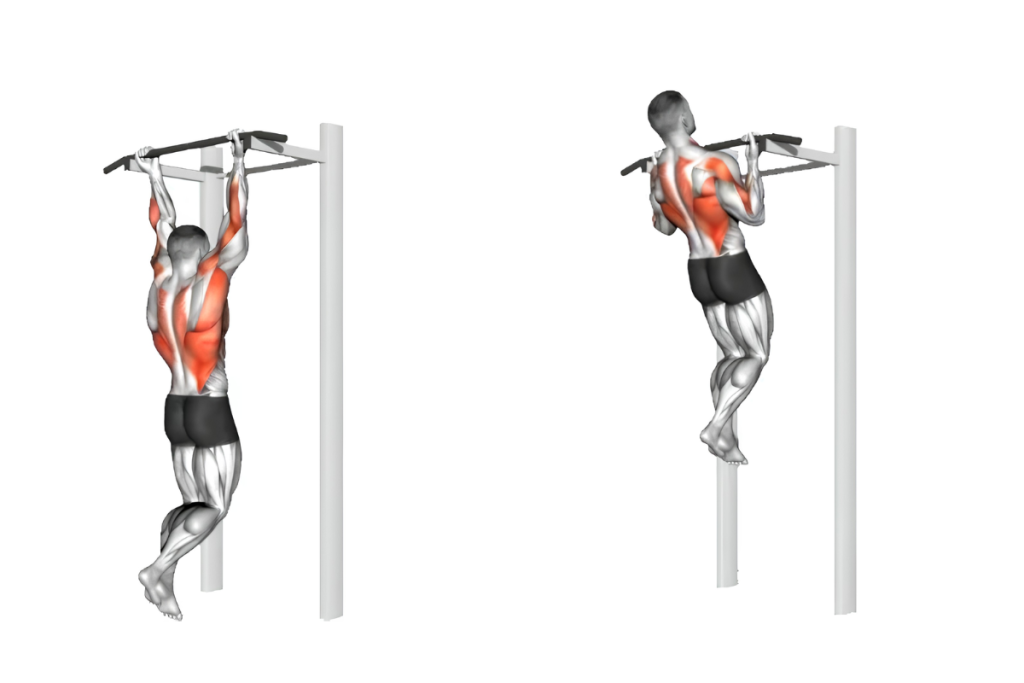
- Common mistakes: swinging for momentum, not fully extending the arms at the bottom.
- Set × rep: 3 sets, each taken to near failure. Beginners can use an assisted machine or a resistance band, 3 × 5–8.
Group 2: Horizontal Pulls for a Thicker Back and Better Posture
3. Bent-over Row
The main horizontal pull for the mid-back and lats, letting you use heavier weights than single-arm rows.
- Step 1: Hold a barbell or 2 dumbbells, hinge at the hips to about 45 degrees, back straight, knees slightly bent.
- Step 2: Pull the weight toward your lower belly, squeezing your shoulder blades.
- Step 3: Lower the weight under control until your arms are straight.
- Common mistakes: rounding the back, gradually standing up as you tire, jerking the weight. If you have back pain, switch to a supported variation (a chest-supported machine or a single-arm row braced on a bench).
- Set × rep: 3 × 8–10.
4. Single Arm Dumbbell Row
Fixes strength imbalances between the two sides of the body.
Step 1: Rest one hand and one knee on a bench, holding a dumbbell in the other hand.
Step 2: Row the dumbbell up toward your ribs, squeezing your shoulder blade.
Step 3: Lower it under control and repeat, then switch sides.
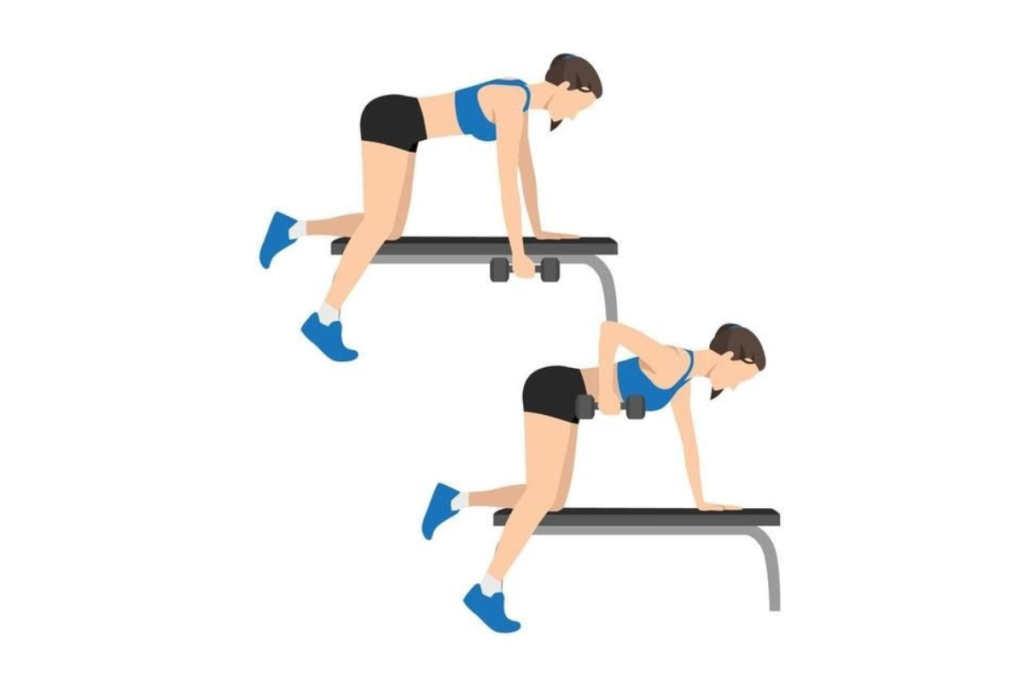
See also: What is the Dumbbell Row.
- Common mistakes: rotating the torso to pull, rowing toward the shoulder instead of the hip.
- Set × rep: 3 × 10–12 per side.
5. Wide Grip Cable Row
Strengthens the upper back and lats.
Step 1: Sit at the cable machine and grip the bar wider than shoulder width.
Step 2: Pull the bar toward your lower belly, squeezing your shoulder blades.
Step 3: Slowly extend your arms under control and repeat.

See also: how to do the Seated Cable Row.
- Common mistakes: leaning back for momentum, shrugging the shoulders toward the ears.
- Set × rep: 3 × 10–12.
Once you’re comfortable: try the Renegade Row. You row the weights from a plank position, training both your back and anti-rotation core. Only attempt it once you can hold a solid plank for 30–45 seconds.
Group 3: Lower Back and Posterior Chain
6. Dumbbell Romanian Deadlift (Dumbbell RDL)
Strengthens the lower back and posterior chain (glutes, hamstrings).
Real-life use: Mimics safely lifting a heavy object off the floor.
Step 1: Stand tall holding dumbbells in both hands, knees slightly bent.
Step 2: Hinge at the hips, keep your back straight and lower the weights until you feel a stretch in your hamstrings.
Step 3: Squeeze your glutes to stand back up to the starting position.
When training, pair it with proper Goblet Squat technique to keep your back solidly protected.

- Common mistakes: rounding the back when lowering, bending the knees too much so it turns into a squat, going too low when your hamstrings aren’t flexible enough yet.
- Set × rep: 3 × 10–12.
7. Kettlebell Swing
Explosive power, lower back strength and endurance.
Real-life use: Builds speed and power for jumping and running.
Step 1: Stand with feet shoulder-width apart, kettlebell between your feet.
Step 2: Hinge slightly at the hips, then drive them forward hard to swing the kettlebell to shoulder height.
Step 3: Let the kettlebell fall with its momentum and repeat in a steady rhythm.

- Common mistakes: lifting with the arms instead of driving with the hips, leaning back at the top.
- Set × rep: 3 × 15.
8. Farmer’s Walk
Improves posture, grip strength and core stability.
Real-life use: Mimics carrying heavy grocery bags.
Step 1: Hold a kettlebell or dumbbell in each hand.
Step 2: Keep your back straight, shoulders down and core braced.
Step 3: Walk for a set distance or time, keeping your posture stable.
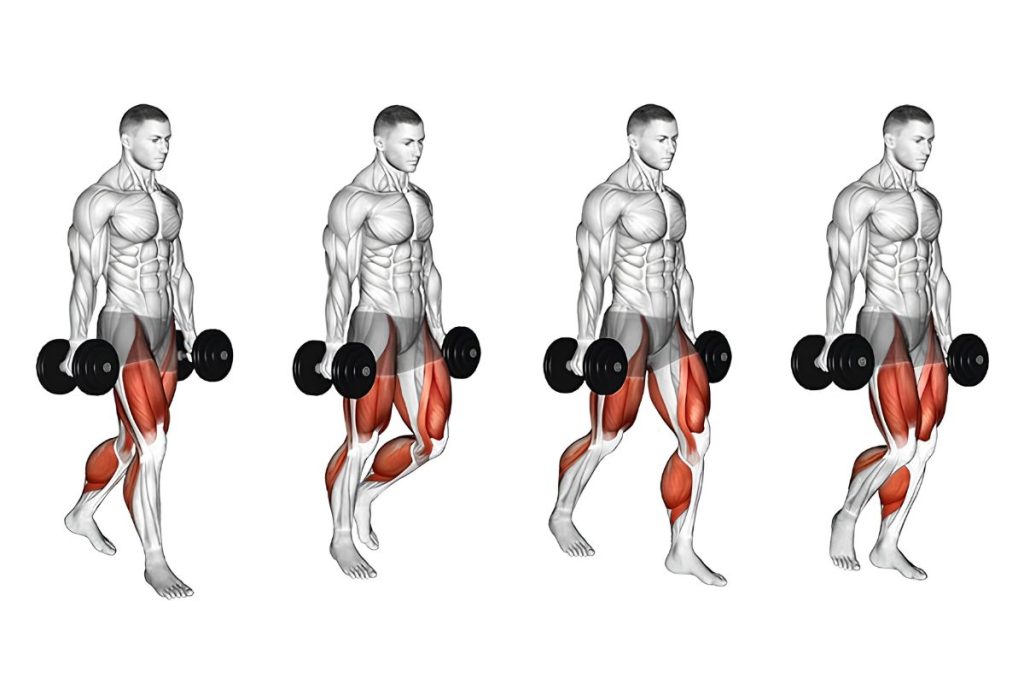
- Common mistakes: leaning to one side, shrugging the shoulders.
- Set × rep: 3 rounds of 30–40 m or 30 seconds each.
9. Superman
An equipment-free exercise that strengthens the lower back (erector spinae) and glutes.
Step 1: Lie face down, arms stretched forward and legs straight.
Step 2: Lift your arms and legs off the floor at the same time, squeezing your lower back and glutes.
Step 3: Hold for one to two seconds, then lower gently and repeat.
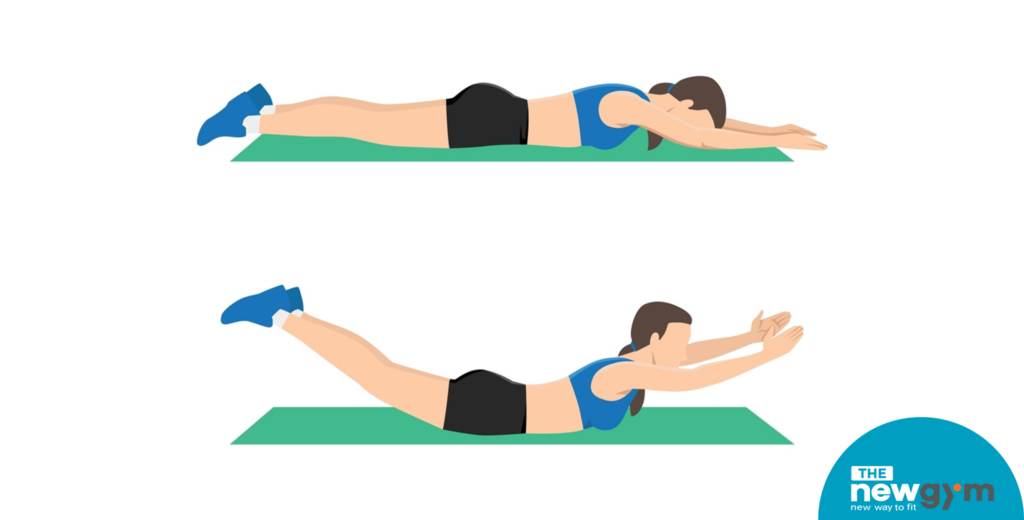
- Common mistakes: craning the neck back, trying to lift the arms and legs too high.
- Set × rep: 3 × 10, holding each rep for 1–2 seconds.
Tips for Effective Back Training
For back training to go beyond simply moving weight and truly build muscle and protect your spine, keep these factors in mind:
| Factor | Specific effect | Advice |
| Mind-Muscle Connection | Feel your lats working instead of your biceps. | Imagine your elbows, not your hands, are doing the pulling. |
| Range of motion (Full ROM) | A full stretch and squeeze builds thickness. | Do some full-body mobility work to loosen your shoulders before pulling. |
| Wrist/shoulder position | Prevents injury and muscle imbalance. | Keep your shoulders down and don’t shrug when doing lat exercises. |
| Recovery | Reduces tightness after high-intensity training. | Add some hip and back stretches to relieve pressure on the spine. |
Before a back session, you can warm up your shoulders with the Band Pull Apart: 2 × 15, arms straight, squeezing your shoulder blades as the band touches your chest.
Who Should Be Careful When Training Back?
If you have back pain, a history of disc herniation or spinal surgery, check with a doctor or physiotherapist before doing loaded exercises like Deadlifts, Kettlebell Swings or Renegade Rows. When getting back into training, start with light exercises such as Superman and Resistance Band Pull Apart and keep your back in a neutral position.
Stop training and see a doctor if you notice any of these signs (see also the OrthoInfo guide to low back pain):
- Back pain that lasts more than a few weeks despite rest
- Pain spreading to the buttocks or legs, with numbness or leg weakness
- Pain after a fall or a hard impact
- Pain with fever, unexplained weight loss, or problems controlling your bladder or bowels (in this case, seek medical care immediately)
Frequently Asked Questions
How many times a week should I train back?
For most people, 2 to 3 back sessions a week is about right, at least 48 hours apart so the muscles can recover. You can train back on its own day or as part of a pull day in a Push Pull Legs split. What matters is enough intensity and gradual progression over time.
Can I train back at home without weights?
Yes. Exercises like Superman, Resistance Band Pull Apart and Chin-ups (if you have a bar) can all be done at home. With light dumbbells you can add Dumbbell Rows and Deadlifts. See also back exercises with dumbbells.
Which exercises build a wide, V-shaped back?
Vertical pulls like Chin-ups and Lat Pulldowns hit the lats hard, the muscles that set back width and the V-shape. Add rows such as the Cable Row for thickness. For a clear V-shape, prioritise pulling movements and progressively increase the load.
A strong back needs a balance of pulling exercises, core work and heavy lifts like the deadlift. Just do the 9 exercises above consistently 2 to 3 times a week with good technique, and you’ll build a back that is both wide and thick, improve your posture and ease back pain from sitting too much.
With machine and free weight zones, The New Gym invites you to try 7 days of free training at 15 locations nationwide, most open 24/7.

🔙Articles on back
A collection of 26 articles about back, ordered by how often they are read.
- Chin Up: How to do it and a plan for people who can’t do one yet
- Expert Guide to the Superman Exercise
- Mastering the Pull-up for Beginners
- 5 Exercises That Effectively Relieve Back Pain
- 5 stretches for instant, safe lower back pain relief at home
- Lat Exercises for Women: 7 Moves for a Slimmer Back
- Get Rid of Back Fat and Armpit Fat: The Most Effective Exercises from The New Gym
- What Is the Dumbbell Pullover? A Guide to Proper Technique
- A Detailed Guide to the Superman Exercise, a Lifesaver for Office Workers’ Aching Backs
- What Is the Renegade Row? A Fast-Acting Belly Fat Burner
See 15 more articles ▾
- What is the Back Extension? A guide to proper technique
- A Guide to Safe and Effective Inverted Row Technique
- What is the Pendlay Row? Benefits and a guide to proper technique
- Top 9 safe and effective exercises for lower back pain
- Upper Body Exercises for Beginners
- Back Pain from the Gym: The ‘Silent Enemy’ and How to Prevent It
- 8 Safe Back Exercises for Older Adults
- Top 9 Effective Dumbbell Back Exercises at Home 2026
- What is the Barbell Row? How to do it right and avoid back pain
- How to do the Chest Supported Row correctly, in full detail
- Lat Pulldown: proper technique and how it works the lats
- Should you go to the gym with back pain? What to keep in mind
- What is swayback? Effective exercises to correct it
- Back Exercises for Beginners: 4 Effective Gym Exercises
About The New Gym
The New Gym is a gym chain with 15 clubs in Ho Chi Minh City, Can Tho, Da Nang and Dong Nai. Most clubs are open 24/7, while Can Tho and Bien Hoa are open from 5am to midnight (see opening hours for each club). Memberships start from 299,000 VND/month on the 6-month plan, including 11+ free group classes. Guided by our “Gym for everyone” philosophy, first-time visitors get a 7-day free trial.
📞 Hotline: 1900 63 69 20
📌 Facebook: facebook.com/thenewgymvietnam
💬 Zalo: zalo.me/4267108480570109866


