
Training at home is effective for getting healthier, building endurance and building muscle at a basic level, as long as you train hard enough and consistently. All you need is a space of about 2 × 2 m, a mat, a sturdy chair and a backpack.
This article is for people who don’t have time to get to the gym, or want to train extra on days they can’t go out. The New Gym walks you through how to prepare, 10 exercises covering all the main muscle groups, a 3-day-a-week plan, and specific tips for training in an apartment.
Is training at home effective?
Yes. You don’t need heavy weights to build muscle. What matters is doing enough sets, with each set hard enough.
A review of 44 meta-analyses, published in the Journal of Sport and Health Science in 2024, found that the weight used mainly affects strength. For muscle growth, total weekly sets are what matter most.
The studies in the review mostly used weights and machines. Even so, the principle still applies to home training: end each set when you only have 1–3 reps left in you. When an exercise gets too easy, make it harder with a backpack full of books or switch to a harder variation.
The biggest limitation of home training is that it’s hard to keep increasing the load for your legs and back over time. After a few months, you’ll need resistance bands, dumbbells, or to combine it with gym sessions.
What do you need to train at home?
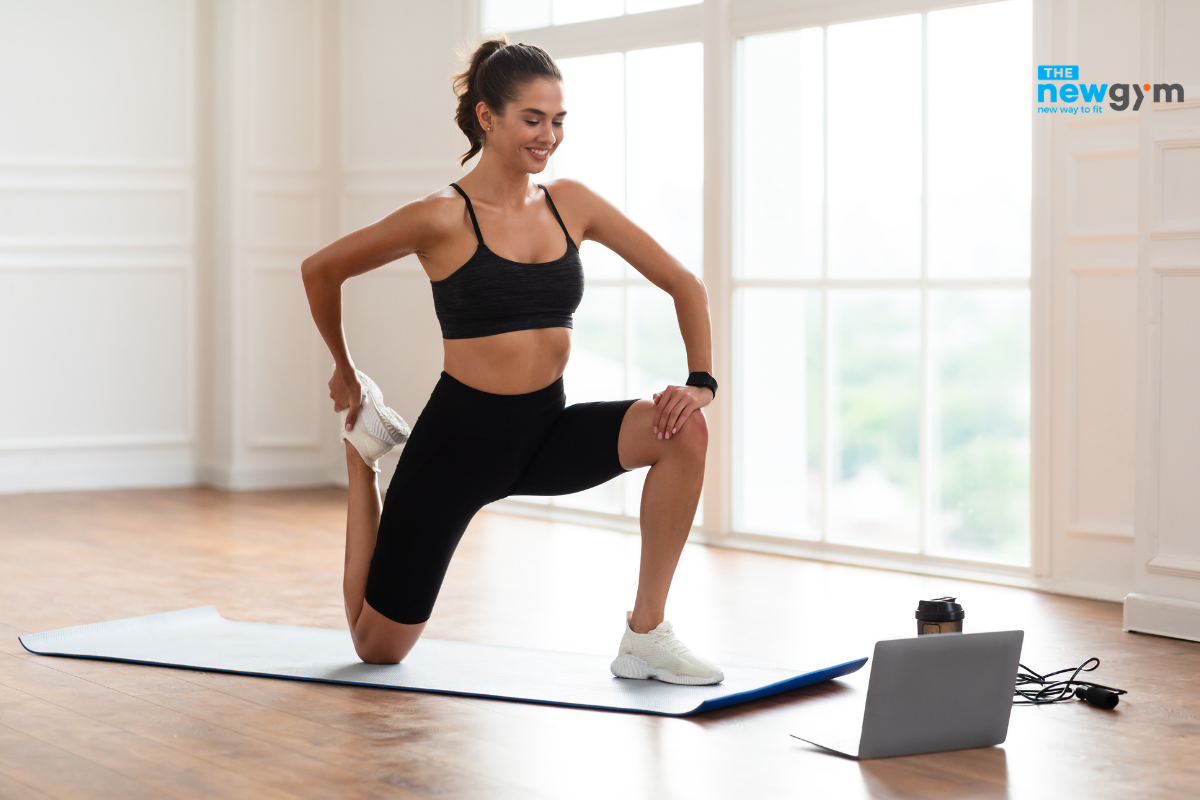
- Space: About 2 × 2 m, enough to lie down with your arms and legs stretched out and take a step back.
- Non-slip mat: Tile floors get slippery when you sweat. A training mat gives you grip and is more comfortable to lie on.
- Sturdy chair: For Step-ups and chair Push-ups. Put the chair against a wall so it doesn’t slide.
- A backpack and some books: A substitute for weights to make Squats, Lunges and back rows harder.
- Fan and water: If your home is hot, keep a fan and a large bottle of water near where you train.
If you live in an apartment, limit jumping exercises in the early morning or late evening to avoid disturbing your neighbours. You can swap them for exercises that work the same muscles without jumping.
Some equipment worth adding if your sessions feel too easy:
- Dumbbells: replace the backpack in Squats, Lunges and back rows, letting you set the weight more precisely and increase it week by week.
- Resistance bands: compact and light, adding resistance to glute, shoulder and back-pulling exercises. How to use them is covered in our resistance band training guide.
- A doorway pull-up bar: lets you do pull-ups, a bodyweight pulling exercise that trains your back and biceps better than backpack rows.

10 home exercises without equipment
The 10 exercises below cover all the main movements: sitting down, stepping, pushing, pulling, hip hinging and holding your torso.
1. Squat
Position: Stand with feet shoulder-width apart, toes turned slightly out.
Lower: Push your hips back and down, knees tracking over your toes, chest open.
Stand up: Push your whole foot into the floor to stand tall.
Common mistake: Heels lifting off the floor. Keep your weight over the middle of your feet. Knees going past your toes isn’t harmful, as long as your heels stay down.
3 sets × 12–15 reps. Progression: wear a backpack with books.
2. Push-up
Position: Hands slightly wider than your shoulders, body straight from head to heels.
Lower: Bend your elbows, angled back about 45 degrees, and lower your chest close to the floor.
Push up: Push the floor away until your arms are almost straight.
Common mistake: Hips sagging. Squeeze your abs and glutes. If you can’t keep your body straight yet, put your hands on a chair or go on your knees.
3 sets × 6–12 reps
3. Reverse Lunge
Position: Stand tall, feet hip-width apart.
Step back: Step one leg back and lower yourself until your back knee almost touches the floor.
Stand up: Push through your front foot to return to the start, then switch legs.
Common mistake: Front knee caving in. Keep your knee in line with your toes, and step back wider if you feel off balance.
3 sets × 8–10 reps per leg
4. Glute Bridge
Position: Lie on your back, knees bent, feet flat on the floor hip-width apart.
Lift your hips: Squeeze your glutes and push your hips up until your shoulders, hips and knees form a line.
Lower: Hold for 2 seconds, then lower slowly.
Common mistake: Arching your lower back at the top. Keep your ribs down and only lift as high as you can while still squeezing your glutes.
3 sets × 12–15 reps. Progression: do it on one leg.
5. Backpack Row
Position: Hold a backpack full of books with both hands, hinge forward about 45 degrees, back straight, knees slightly bent.
Pull: Pull the backpack toward your belly, squeezing your shoulder blades together.
Lower: Lower the backpack slowly until your arms are straight.
Common mistake: Rounding your back as you pull. Take some books out of the backpack and keep your back straight throughout.
3 sets × 10–12 reps
6. Superman
Position: Lie face down, arms stretched straight overhead.
Lift: Gently lift your arms, chest and legs off the floor at the same time.
Hold: Hold for 2 seconds, then lower.
Common mistake: Craning your neck back. Keep your eyes on the floor and your neck in line with your back.
3 sets × 10–12 reps
7. Plank
Position: Rest on your elbows under your shoulders, legs straight.
Hold your body: Squeeze your abs and glutes, keeping your body straight from head to heels.
Breathe: Breathe steadily throughout the hold.
Common mistake: Back sagging or hips too high. Go on your knees if you can’t keep your body straight yet.
3 sets × 20–40 seconds
8. Dead Bug
Position: Lie on your back, arms straight up to the ceiling, knees bent at right angles.
Extend: Press your lower back into the floor and extend your right arm behind your head and your left leg out at the same time.
Switch: Bring them back, then switch sides.
Common mistake: Lower back lifting off the floor. Shorten how far you extend your leg.
3 sets × 8–10 reps per side
9. Chair Step-up
Position: Stand in front of a sturdy chair placed against a wall.
Step up: Place your whole right foot on the chair and push through it to stand up on the chair.
Step down: Step down slowly, then switch legs.
Common mistake: Pushing off with your bottom leg instead of driving through the leg on the chair. Let your bottom foot only lightly touch the floor as you start.
3 sets × 8–10 reps per leg
10. High Knees
Position: Stand tall, hands in front of your belly.
Lift your knees: Run on the spot, lifting your knees up to nearly touch your hands.
Keep the rhythm: Keep a steady pace, landing lightly on the balls of your feet.
Common mistake: Leaning back when tired. Keep your body upright. If you live in an apartment, switch to high-knee marching to reduce noise.
3 sets × 30 seconds. To train each muscle group in more detail, see our at-home ab exercises and at-home arm exercises.
Harder Variations When Exercises Get Too Easy
The five harder variations are the Decline Push-up, Diamond Push-up, Pike Push-up, Bulgarian Split Squat and Single-Leg Glute Bridge, each replacing one of the 10 basic exercises.
When you can finish all your reps with plenty left in the tank, switching to a variation is how you apply progressive overload without weights.
Decline Push-up (replaces the Push-up): feet on a chair, hands on the floor, so your upper chest and shoulders take more load.
Diamond Push-up (replaces the Push-up): hands together under your chest in a diamond shape, putting more load on your triceps.
Pike Push-up (replaces the Push-up, to train shoulders): lift your hips high into an inverted V, lower the top of your head toward the floor, then push up with your shoulders.
Bulgarian Split Squat (replaces the Reverse Lunge): rest the top of your back foot on a chair and lower yourself with your front leg. Your front leg carries almost all your weight, so it’s much harder than a Lunge.
Single-Leg Glute Bridge (replaces the Glute Bridge): extend one leg and push your hips up with the other.
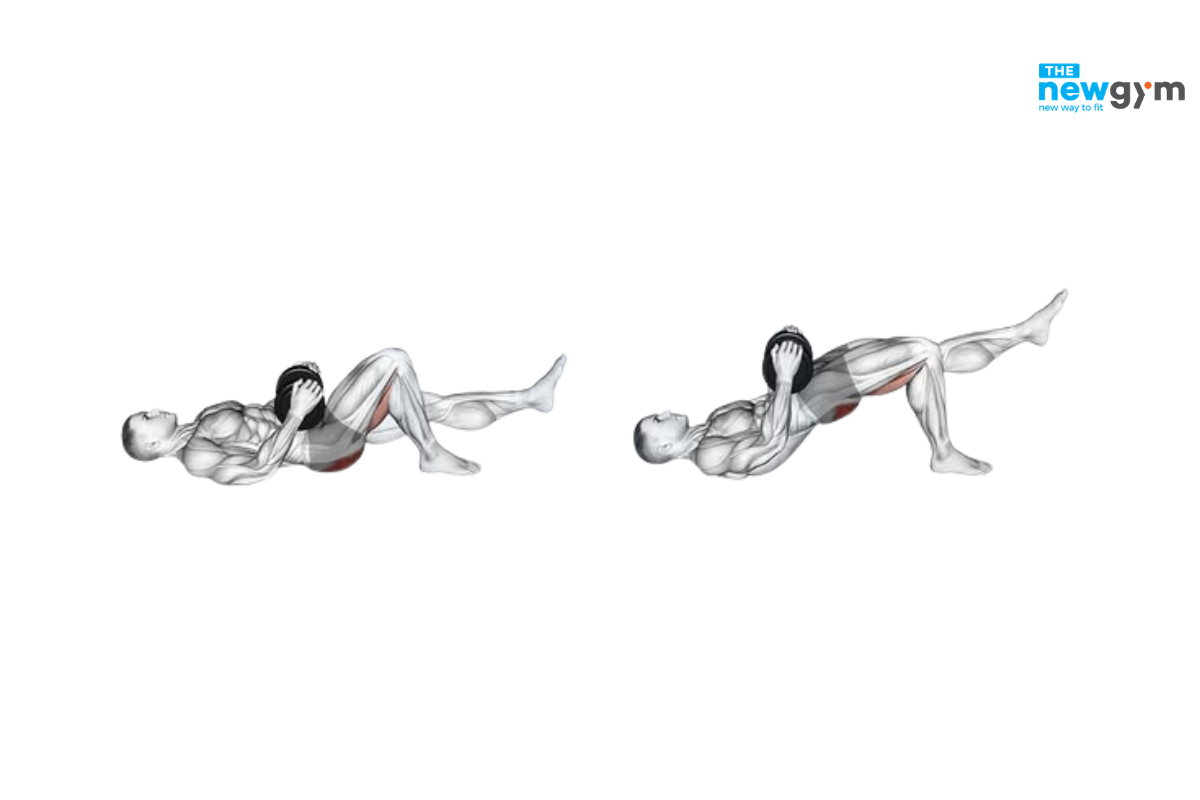
Change only one exercise at a time and keep the rest the same, so it’s easy to track which one is improving.
A 3-day-a-week home training plan
Train 3 times a week, for example Monday, Wednesday and Friday. Each session takes about 30 minutes, including a 5-minute warm-up and 5 minutes of stretching.
- Session A: Squat, Push-up, Backpack Row, Glute Bridge, Plank
- Session B: Reverse Lunge, Step-up, Superman, Dead Bug, High Knees
In week 1, do Session A, Session B, Session A. In week 2, switch to Session B, Session A, Session B. This meets the WHO recommendation of muscle-strengthening activity at least two days a week.
When the exercises get too easy, make them harder by adding books to your backpack, lowering slowly over 3 seconds, or switching to a harder variation. Specific ways to increase the difficulty are covered in 6 bodyweight exercises without equipment.
Home Training Plans by Goal
The three home training plans by goal are fat loss with 40 seconds work and 20 seconds rest; equipment-free muscle building with slow lowering; and full-body training with dumbbells.
Each plan can replace one session in the 3-day plan above when you want to focus on a specific goal. Exercises from the 10 basics keep the same technique, and new exercises have a short description in the table.
The table below helps you quickly choose a plan by goal:
| Goal | Plan to choose | Frequency |
|---|---|---|
| Weight loss, fat loss | Home training for fat loss | 3–4 sessions/week |
| Building muscle without equipment | Home training to build muscle without equipment | 2–3 sessions/week |
| Full-body strength | Home training with dumbbells | 2–3 sessions/week |
| Complete beginners | The 3-day-a-week plan above, then choose a goal-based plan after 4 weeks | Start with 2–3 sessions/week |
You can combine plans during the week, for example dumbbells on Monday, fat loss on Wednesday and equipment-free muscle building on Friday, as long as you have at least 1 rest day between sessions.
Home Training for Fat Loss
Structure: 3 rounds, each exercise 40 seconds of work then 20 seconds of rest. This is a form of high-intensity interval training (HIIT), so the whole session only takes about 25 minutes.
| Exercise | Duration | How to do it |
|---|---|---|
| Crawl Out | 40 seconds | Bend down and place your hands on the floor, walk your hands out to a high plank, then walk back and stand up |
| Shoulder Tap | 40 seconds | From a high plank, lift each hand in turn to tap the opposite shoulder, keeping your hips still |
| Up Down | 40 seconds | From standing, come down to a high plank, lower to a forearm plank one arm at a time, push back up, then stand up |
| Squat Jump | 40 seconds | Squat then jump, landing softly. In an apartment, swap for a regular Squat |
| Reverse Lunge | 40 seconds | As in exercise 3, switching legs continuously |
| Glute Bridge | 40 seconds | As in exercise 4 |
| Butterfly Sit-up | 40 seconds | Lie on your back with the soles of your feet together, curl up and reach your hands toward your feet |
| Leg Raise | 40 seconds | Lie on your back, raise both legs straight up to 90 degrees, then lower slowly without touching the floor |
Home Training to Build Muscle Without Equipment
Structure: 4 rounds, each exercise 40 seconds of work then 15 seconds of rest, with 2 minutes of rest after each round. With no weights to add load, this plan relies on a slow lowering of about 3 seconds per rep to keep your muscles under load longer (time under tension).
| Exercise | Duration | How to do it |
|---|---|---|
| Tip Toe Walking | 40 seconds | Walk around the room on your tiptoes, heels off the floor |
| Tiptoe Lunge Hold (right leg forward) | 40 seconds | Lower into a lunge, lift your front heel and hold still |
| Tiptoe Lunge Hold (left leg forward) | 40 seconds | Switch legs and do the same |
| Sumo Squat Pulse | 40 seconds | Stand with a wide stance, lower deep, pulse up and down 3 times in the bottom half, then stand up |
| Curtsy Lunge | 40 seconds | Step one leg diagonally behind the other, lower yourself, then stand up and switch legs |
| Lateral Ski Jump | 40 seconds | Jump sideways and land on one leg, alternating. In an apartment, swap for a side step |
This plan only trains the lower body. So keep Push-ups and backpack rows in your other sessions during the week.
Home Training with Dumbbells
Structure: 3 rounds, completing the full reps for each exercise within 1 minute and resting for the rest of the minute, with 90 seconds of rest between rounds. Add 2 reps each round.
| Exercise | Round 1 / 2 / 3 | How to do it |
|---|---|---|
| Dumbbell Thruster | 15 / 17 / 19 rep | Hold the dumbbells at your shoulders, squat down, then stand up and press them overhead in one motion |
| Dumbbell Push-up | 12 / 14 / 16 rep | Push-ups with your hands gripping dumbbells on the floor |
| Dumbbell Burpee | 10 / 12 / 14 rep | Put the dumbbells down, jump your feet back to a plank, do a push-up, jump your feet in, then pick up the dumbbells and stand up |
| Dumbbell Jumping Lunge | 20 / 22 / 24 rep | Holding dumbbells, jump from a lunge and switch legs in mid-air |
| Dumbbell Russian Twist | 30 / 32 / 34 rep | Sit leaning back, lift your feet, rotate the dumbbell to each side, counting each side as 1 rep |
Sticking with home training
Home training is easier to quit than gym training, because there’s no gym atmosphere and household chores easily get in the way.
- Pick a fixed time: Train at the same time each day, for example right after you get home from work.
- Keep your gear ready: Lay out your mat and keep your backpack and water bottle in your training corner.
- Start small: In the first week, just 20 minutes per session is enough.
Also, set a specific, measurable goal instead of just “training to get healthy”, for example doing 10 Push-ups in a row or holding a Plank for 60 seconds. Break your goal into 4-, 8- and 12-week milestones so you know how far you’ve come. Record your reps and hold times after each session, because seeing the numbers go up is the easiest way to stay motivated when training alone.
Home training works when you train hard enough, do enough sets and stay consistent 3 times a week. Start with the 10 basic exercises, switch to harder variations once you’re comfortable, then choose a goal-based plan when you want to focus more. When you need to add load with weights and machines, most The New Gym locations are open 24/7, and first-time visitors get 7 days of free training.

FAQ
1. Can you build muscle training at home without equipment?
Yes, especially for beginners and intermediate exercisers. When the exercises get too easy, make them harder with a backpack full of books or a harder variation.
2. How long does home training take to show results?
After a few weeks of consistent training, most people feel stronger and can do more reps. Changes in appearance come more slowly and vary from person to person.
3. Does training at home help you lose weight?
Training burns extra energy and preserves muscle, but weight change mainly depends on your total food intake and activity over many weeks.
4. Should you do jumping exercises in an apartment?
You can, if you train at reasonable times and on a thick mat. If you’re worried about disturbing your neighbours, swap them for non-jumping exercises like Step-ups or high-knee marching.
5. Do you need to buy weights or equipment?
Not for the first few months. A training mat, a sturdy chair and a backpack with books are enough for the 10 basic exercises. When the exercises get too easy, dumbbells or resistance bands are the two things to buy first, because they’re compact and let you increase the difficulty gradually. If you don’t have weights yet, full water bottles or a bag of rice can stand in for the dumbbell plan.
6. Can you combine several plans in one week?
Yes, if you split your sessions sensibly and keep at least 1 full rest day a week. For example: 2 dumbbell sessions, 1 fat-loss session and 1 equipment-free muscle-building session. Don’t put 2 fat-loss sessions back to back, because high intensity needs recovery time.
7. What are the common mistakes when training at home?
- Skipping the warm-up and cool-down: makes wrist, knee and lower back injuries more likely. Spend 5–10 minutes warming up and 5 minutes stretching.
- Poor form with no mirror: film your session or train in front of a mirror to check your posture.
- Overdoing it in the first week: training 6–7 days in a row easily leads to burnout and quitting. Keep to 3 sessions a week with rest days in between.
- Not increasing the difficulty: every 2 weeks or so, add reps, cut rest time or switch to a harder variation.
- Ignoring nutrition: training consistently but eating erratically makes results hard to see. Eat enough protein and vegetables and drink enough water.
8. When should you move to training at the gym?
When the home exercises are too easy even with the backpack, or when you want to build strength and muscle faster. At that point, machines and weights let you increase the load more steadily.
9. What can you use instead of dumbbells?
You can use a 1.5-litre water bottle (about 1.5 kg), a 5-litre water jug (about 5 kg) or a backpack full of books (about 5–10 kg). This is a temporary solution for the first few weeks; once you’re used to it, dumbbells make it easier to increase the weight.
🏠Articles on home training
A collection of 13 articles about home training, ordered by how often they are read.
- 12 At-Home Morning Exercises in Just 15 Minutes
- What Is Calisthenics? An Intermediate Program from Basic to Advanced
- A Muscle-Building Plan (No Equipment Needed)
- A 10-Minute Routine You Can Do Anywhere
- Beach Workout: 9 Full-Body Moves Without Equipment
- A Lifesaver for Office Workers: Exercises at Your Desk
- A Guide to Training Outdoors and in the Park
- Watch Your Favourite Match and Exercise at the Same Time? The ‘Secret’ to Doing Both!
- What is bodyweight training? 6 bodyweight exercises without equipment
- Switch Up Your Weekend with Fun, Healthy Outdoor Activities
- Family Fitness Fun with 3 Creative Workout Plans
References
World Health Organization. Physical activity. https://who.int/initiatives/behealthy/physical-activity
McLeod JC, et al. (2024). The influence of resistance exercise training prescription variables on skeletal muscle mass, strength, and physical function in healthy adults: An umbrella review. Journal of Sport and Health Science, 13(1), 47–60. https://pubmed.ncbi.nlm.nih.gov/37385345/
Conclusion
Home training works if you train hard enough, do enough sets and stay consistent. The ten exercises in the 3-day-a-week plan cover all the main muscle groups and only need a mat, a chair and a backpack. When the exercises get too easy, increase the difficulty or combine with gym sessions to keep progressing.
About The New Gym
The New Gym is a gym chain with 15 clubs in Ho Chi Minh City, Can Tho, Da Nang and Dong Nai. Most clubs are open 24/7, while Can Tho and Bien Hoa are open from 5am to midnight (see opening hours for each club). Memberships start from 299,000 VND/month on the 6-month plan, including 11+ free group classes. Guided by our “Gym for everyone” philosophy, first-time visitors get a 7-day free trial.
📞 Hotline: 1900 63 69 20
📌 Facebook: facebook.com/thenewgymvietnam
💬 Zalo: zalo.me/4267108480570109866


