
Your abs aren’t a single muscle but four layered groups, each responsible for a different direction of movement. The part people call a six-pack is only the outermost layer.
That’s why a routine with only Crunches and Sit-Ups isn’t enough. Those two bend your torso forward, but your abs also have to resist rotation, resist side-bending and keep your spine stable while your arms and legs move, things crunches don’t train.
Let’s go through 20 Ab Exercises for Beginners with The New Gym to build a solid core strength foundation starting today.
How Are Your Abs Built?
| Muscle group | Location | Main function |
|---|---|---|
| Rectus abdominis | Runs down the front of the belly, the outermost layer | Bends the torso forward, forms the six-pack |
| External and internal obliques | Both sides of the waist, layered diagonally | Rotates and side-bends the torso, resists rotation |
| Transverse abdominis | The deepest layer, wrapping around the torso like a belt | Compresses the abdomen and stabilises the spine |
| Serratus anterior | Both sides of the rib cage, under the armpits | Moves the shoulder blades forward and works with the abs (it’s a chest wall muscle, not part of the abs) |
The rectus abdominis gets the most attention because it creates the visible shape. But it’s the most superficial muscle and handles only one direction of movement.
The obliques work whenever you twist to grab something behind you, bend sideways to pick something up, or have to resist a force trying to rotate your body.
The transverse abdominis is the deepest and functionally most important group. When it contracts, it creates pressure in the abdomen and keeps the spine stable. It doesn’t create a visible shape, but it’s what protects your lower back.
The serratus anterior sits on both sides of the rib cage and works with the abs in hand-supported exercises like the Plank and Push-up.
These muscles need exercises in different directions. A complete ab session should include a hold, a crunch, a leg raise and an anti-rotation exercise.

Benefits of training your abs
- Less lower back pain from sitting: a stronger transverse abdominis reduces the load the passive structures of the spine have to carry.
- Better posture: your abs and back muscles work together to hold your pelvis in a neutral position instead of tilting forward.
- Support for heavy lifts: Squats and Deadlifts both need a solid midsection before your legs and hips can drive.
- Easier everyday movement: carrying things, bending to pick up and twisting all need a stable core.
- Lower injury risk when active: a stable torso helps force travel in the right direction instead of piling onto your lower back.
About belly fat: no exercise reduces fat specifically on your belly. Fat comes off according to your whole body’s energy balance. Ab training makes the muscles under the fat stronger and thicker, which is a separate process from fat loss.
20 Ab Exercises for Beginners

- Plank
The Plank doesn’t just train your abs; it also improves posture and reduces lower back pain. Regular planking improves spinal stability.
Step 1. Lie face down with your elbows on the floor, directly under your shoulders.
Step 2. Come up onto your toes and lift your body into a straight line from head to heels.
Step 3. Tuck your pelvis slightly so your lower back doesn’t sag, and squeeze your abs and glutes.
Hold for 20 to 30 seconds, increasing as you get used to it.
Variations once you’ve mastered the basic Plank:
- Plank Knee Tap: from a high plank, lower one knee to lightly touch the mat then lift it, alternating sides continuously. Do 10 reps, keeping your back straight throughout.
- Plank Shoulder Tap: from a high plank with feet shoulder-width apart, lift one hand to lightly tap the opposite shoulder, then switch. Do 10 reps without letting your hips sway.

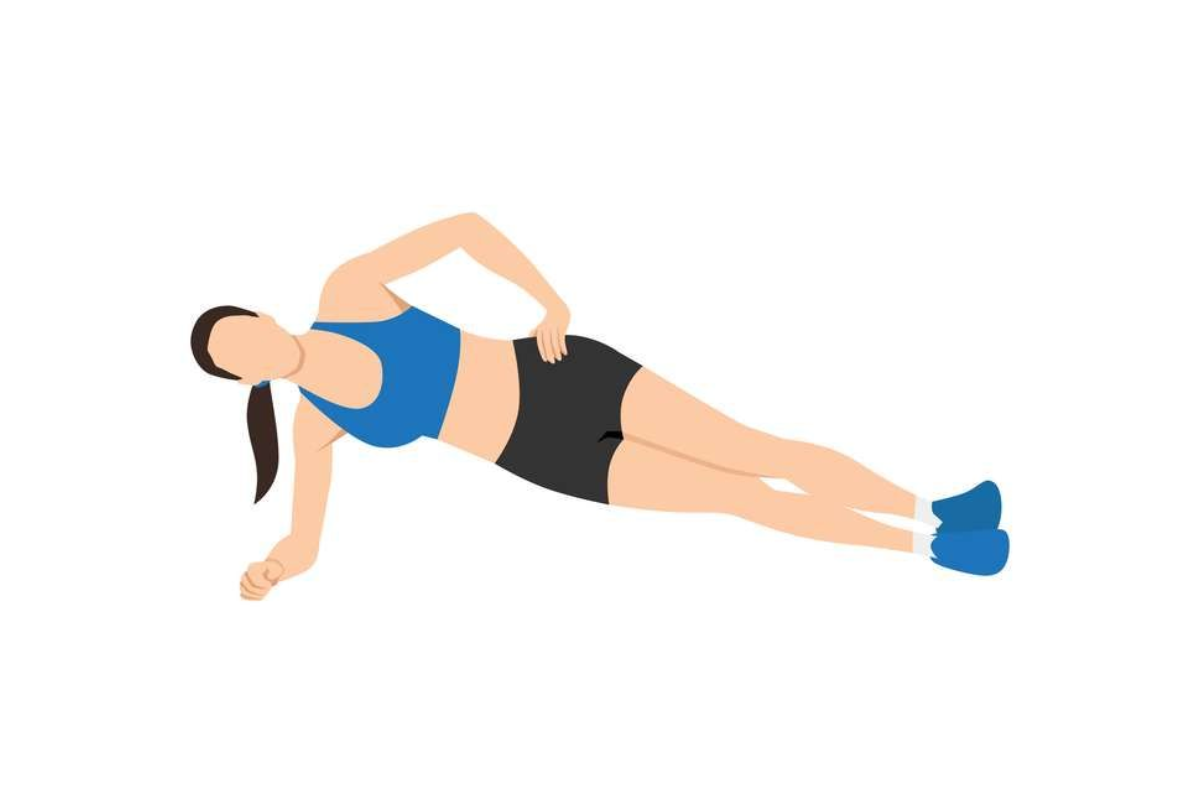
- Side Plank
The side plank is a great ab exercise for the obliques, the muscles that trim your waist and support twisting movements in sport.
Step 1. Lie on your side, propped on one elbow under your shoulder.
Step 2. Lift your hips until your shoulders, hips and ankles form a line.
Step 3. Keep your shoulders square to the floor, without tipping forward or back.
Hold for 15 to 20 seconds per side.
- Crunch
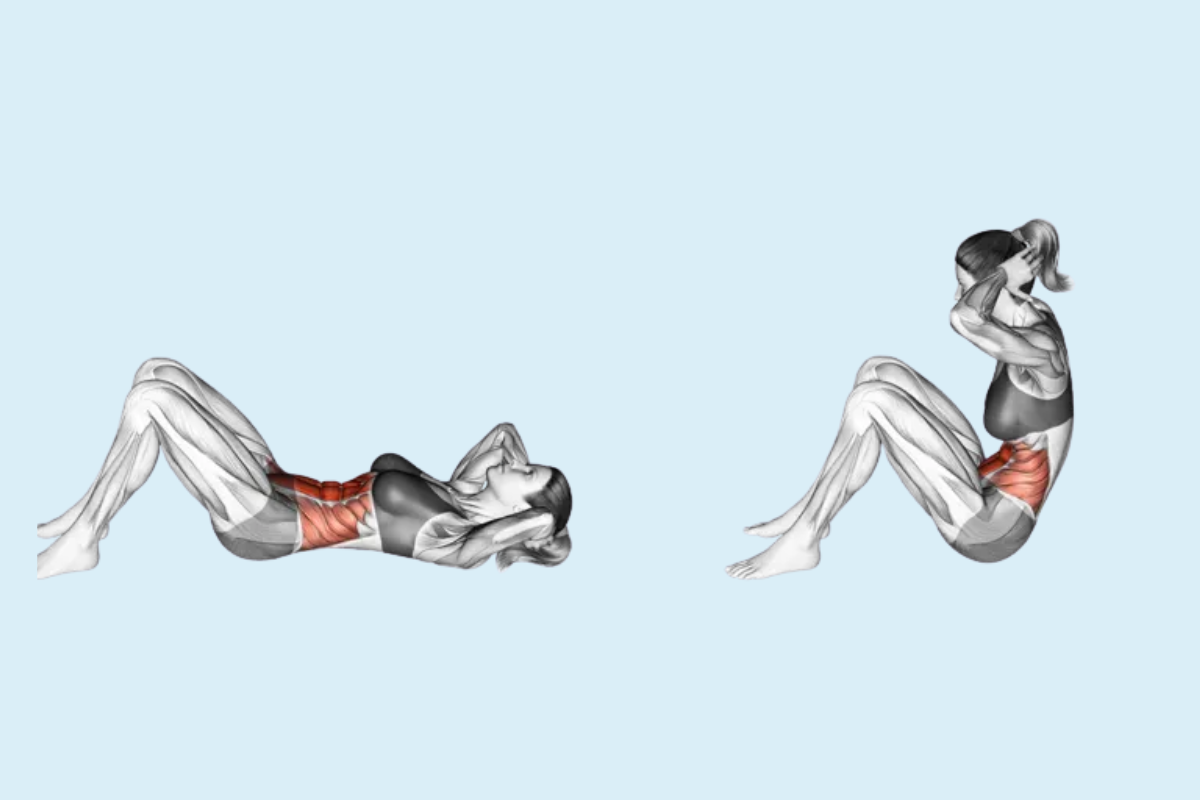
The crunch mainly targets the upper abs. Tip: you don’t need to sit all the way up; just lifting your shoulders off the floor is enough to work your abs.
Step 1. Lie on your back, knees bent, feet flat on the floor.
Step 2. Place your hands lightly beside your head, not clasped tightly behind your neck.
Step 3. Squeeze your abs and lift your head and shoulders off the floor, without sitting all the way up.
Step 4. Lower slowly over 2 seconds.
Do 12 to 15 reps.
- Reverse Crunch
This exercise focuses more on the lower part of the abs.
Step 1. Lie on your back, hands by your hips, knees bent.
Step 2. Use your abs to curl your pelvis up, bringing your knees toward your chest.
Step 3. Lower your legs slowly, keeping your lower back on the floor.
Do 12 to 15 reps.

- Bicycle Crunch
The bicycle crunch is one of the most effective ab exercises.
Step 1. Lie on your back, hands lightly beside your head, and lift both legs off the floor.
Step 2. Lift your shoulders off the floor, bringing your left elbow toward your right knee while extending your left leg.
Step 3. Switch sides at a steady pace, without jerking.
Do 12 to 15 reps per side.

- Dead Bug
The Dead Bug builds coordination and stability and reduces pressure on the lower back. It’s great for core beginners.
Step 1. Lie on your back, arms straight up to the ceiling, knees bent at 90 degrees.
Step 2. Press your lower back into the floor with no gap.
Step 3. Extend your right arm behind your head and your left leg out at the same time, then bring them back and switch sides.
Do 8 to 10 reps per side.

- Mountain Climbers
Mountain Climbers work your core while raising your heart rate to burn fat. You can speed up for a more effective cardio workout. You can also add 30 minutes of walking on a treadmill after your session to maximise fat loss.
Step 1. Get into a high plank with your hands directly under your shoulders.
Step 2. Brace your abs and drive one knee toward your chest.
Step 3. Switch legs continuously, keeping your hips from bobbing with your legs.
Do 30 to 45 seconds.

- Russian Twists
Russian twists hit the obliques hard and improve your rotational flexibility.
Step 1. Sit on the floor, knees bent, leaning back about 45 degrees.
Step 2. Clasp your hands in front of your chest and rotate your torso to one side.
Step 3. Rotate to the other side, keeping your back straight rather than rounded.
Do 10 to 12 reps per side.

- Leg Raises
Your abs work as one unit, so you can’t train the lower abs in isolation, but leg raises make the lower part of your abs work harder to hold your pelvis in place.
Step 1. Lie on your back, legs straight, hands by your hips or under your glutes.
Step 2. Raise both legs until they’re perpendicular to the floor.
Step 3. Lower them slowly, stopping when your feet are about a hand’s span off the floor.
Do 10 to 12 reps.

- Flutter Kicks
This exercise focuses on the lower abs with a small range of motion.
Step 1. Lie on your back and lift both legs about 15 to 20cm off the floor.
Step 2. Press your lower back into the floor.
Step 3. Kick your legs up and down alternately with small, steady movements.
Do 20 to 30 seconds.

- Scissor Kicks
Beyond the lower abs, this movement also works the hip muscles, improving flexibility.
Step 1. Lie on your back, lift both legs off the floor and press your lower back down.
Step 2. Cross your legs over each other horizontally.
Step 3. Open them and switch which leg is on top, keeping a steady rhythm.
Do 20 to 30 seconds.

- Standing Bicycle Crunch
This is a simpler version of the bicycle crunch, good for beginners or anyone who finds floor exercises hard.
Step 1. Stand tall with your hands lightly beside your head.
Step 2. Lift your right knee out to the side while bending your torso to the right so your right elbow comes down toward your knee.
Step 3. Return to standing; finish one side, then switch.
Do 12 to 15 reps per side.

- Standing Side Crunch
This exercise helps slim your waist and strengthens the obliques.
Step 1. Stand tall with your hands lightly beside your head.
Step 2. Lift your right knee while twisting your torso to bring your left elbow toward it.
Step 3. Return to standing and switch sides.
Do 12 to 15 reps per side.

- Bird Dog
The Bird dog trains balance, strengthens the lower back and stabilises the core. Many physiotherapists recommend it for people with mild back pain.
Step 1. Get on all fours, hands under your shoulders and knees under your hips.
Step 2. Keeping your back flat, extend your left arm forward and your right leg back.
Step 3. Hold for 2 seconds without letting your hips tilt, then bring them back and switch sides.
Do 10 to 12 reps per side.
- Superman
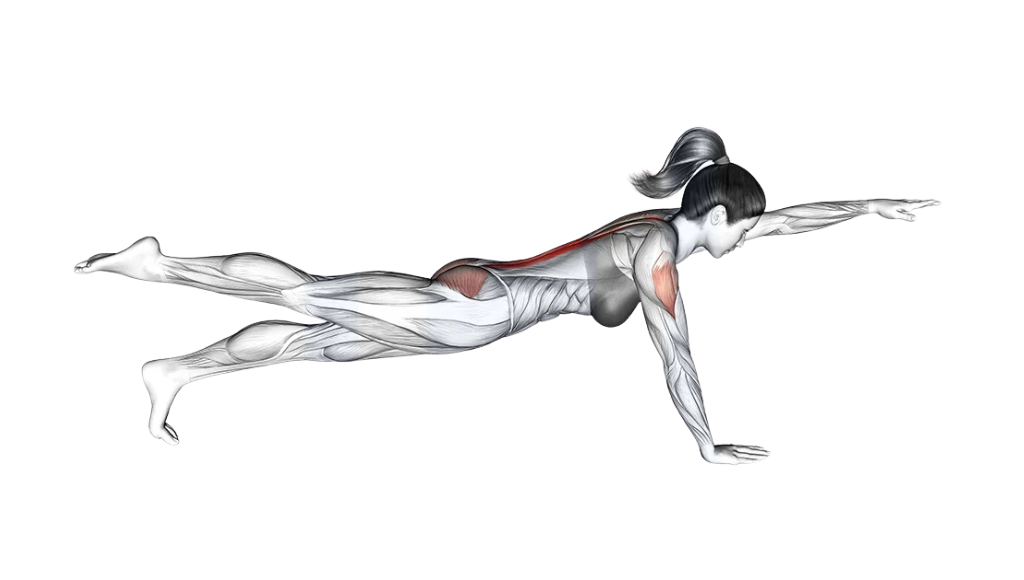
The Superman exercise strengthens the lower back, glutes and shoulders. It’s a great accessory exercise for anyone who sits a lot.
Step 1. Lie face down, arms stretched forward and legs straight.
Step 2. Lift your arms, chest and legs off the floor at the same time.
Step 3. Hold for 2 to 3 seconds, then lower slowly.
Do 10 to 12 reps.

- Toe Touches
This movement works the upper abs while activating the lower abs. Focus on squeezing your abs to avoid using momentum.
Step 1. Lie on your back and raise both legs straight up, perpendicular to the floor.
Step 2. Reach both arms up, squeezing your abs to lift your shoulders and reach toward your toes.
Step 3. Lower your shoulders slowly, keeping your legs in place.
Do 12 to 15 reps.

- Sit-Ups
This is an advanced version of the crunch. However, be careful, as full sit-ups can easily strain your lower back if your technique is off.
Step 1. Lie on your back, knees bent, feet anchored or free.
Step 2. Cross your arms over your chest.
Step 3. Lift your whole upper body up to a seated position.
Step 4. Lower slowly, without dropping.
Do 10 to 12 reps.

- Side Leg Lifts
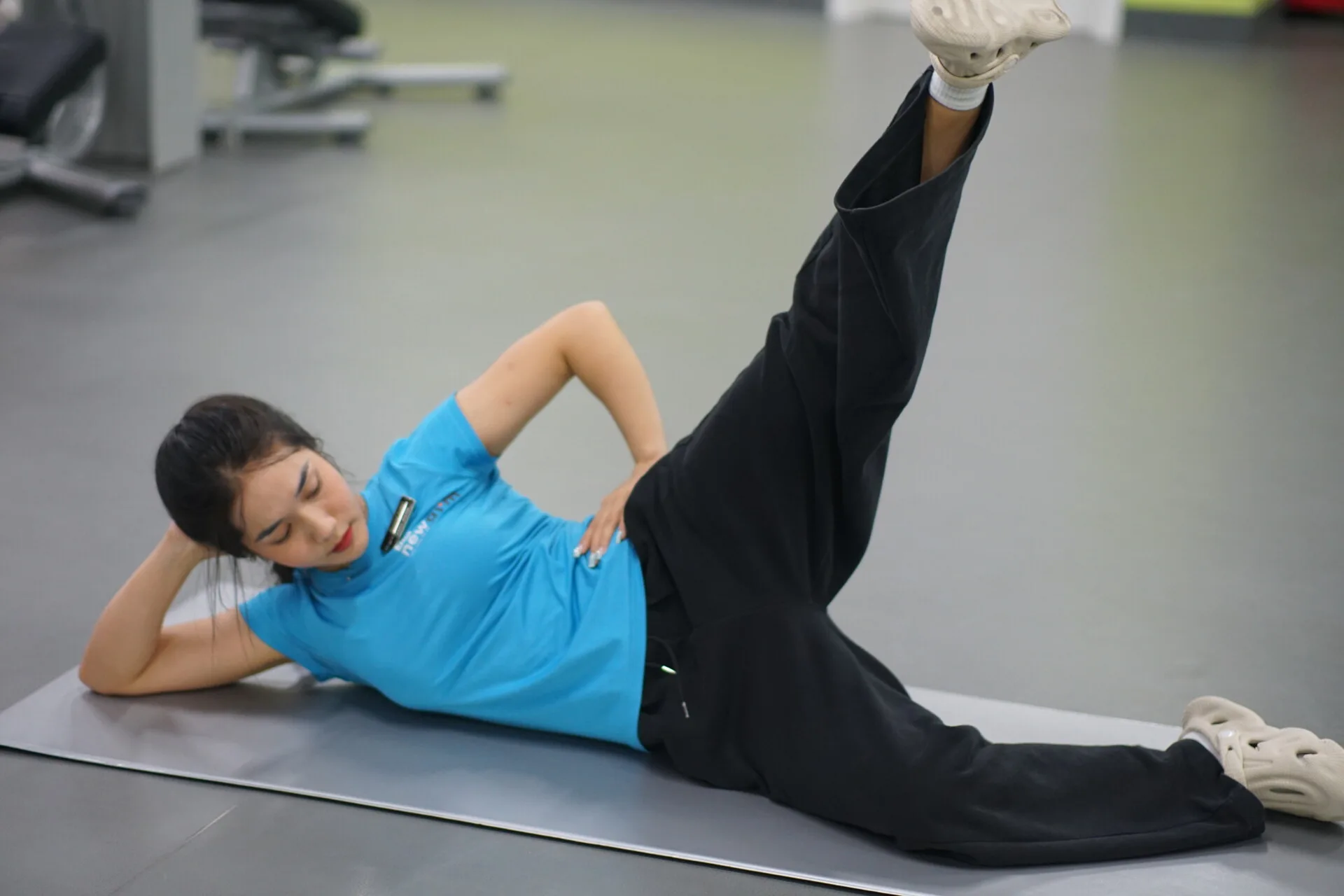
This exercise trains the obliques and hip muscles, firming your waist and making your hips more flexible.
Step 1. Lie on your side with your body in a straight line, bottom arm supporting your head.
Step 2. Raise your top leg to about 45 degrees, keeping it straight.
Step 3. Lower slowly without touching the bottom leg.
Do 15 to 20 reps per side.
- Heel Taps
A simple move that “burns” the obliques very quickly.
Step 1. Lie on your back, knees bent, feet close to your glutes.
Step 2. Lift your head and shoulders slightly off the floor.
Step 3. Bend your torso to one side and reach to touch your heel on that side, then switch.
Do 12 to 15 reps per side.

- V-Ups
This is a complete exercise for the upper abs, lower abs and obliques. It’s a bit hard, but very effective.
Step 1. Lie on your back, arms stretched overhead, legs straight.
Step 2. Lift your upper body and legs at the same time, reaching your hands toward your feet to form a V.
Step 3. Lower slowly, without letting your hands and feet touch the floor between reps.
Do 8 to 10 reps.

Common Ab Training Mistakes
- Pulling on your neck with your hands when crunching. Cause: your abs aren’t strong enough yet, so your hands compensate. Fix: rest your hands lightly beside your head or cross them over your chest, and reduce the reps if needed.
- Letting your lower back sag in holds. Cause: your abs switch off when you’re tired. Fix: end the set there; holding 20 seconds correctly is better than 60 seconds incorrectly.
- Only doing crunches. Cause: thinking the abs only work in one direction. Fix: add one hold and one rotation exercise each session. The 10-minute ab routine shows how to combine the Side Plank, Russian Twist and Flutter Kicks into a short session.
- Training every day without rest. Cause: thinking the abs are different from other muscles. Fix: 3 sessions a week, every other day.
- Holding your breath through the whole set. Cause: confusing bracing your abs with not breathing. Fix: breathe out during the effort phase and breathe in during the release phase.
- Adding reps instead of difficulty. Cause: thinking more reps is always better. Fix: once you can easily do more than 20 reps, move to a harder variation.
How Do You Get a Six-Pack?
A six-pack shows when two conditions are met together: the rectus abdominis is thick enough, and the layer of fat covering it is thin enough for the outline to show.
Ab training takes care of the first condition. The second depends on your whole body’s energy balance, so no exercise can affect it directly.
The number of ab segments and how they’re arranged are also genetic. The horizontal tendon bands dividing the rectus abdominis vary between people: some have a 4-pack, others a 6- or 8-pack, and no training can change that structure. Two people with the same muscle mass and body fat can still look different.
The lower your body fat, the clearer your ab definition. The American Council on Exercise (ACE) classification, cited by MedicineNet in a medically reviewed article, breaks body fat down as follows:
| ACE classification | Nam | Women | Ab visibility |
|---|---|---|---|
| Essential fat | 2–4% | 10–12% | Not something to aim for, as this is the minimum the body needs to function normally |
| Athletes | 6–13% | 14–20% | Abs usually clearly visible |
| Fitness | 14–17% | 21–24% | Ab outline starts to show |
| Acceptable | 18–25% | 25–31% | Abs usually not visible yet |
| Obese | 26% and above | 32% and above | Abs not visible |
So for most people, the realistic point where abs start to show is the Fitness range (men 14–17%, women 21–24%), without needing to get down to athlete levels.
How long it takes to see changes also varies a lot and depends on your starting point. A more reliable measure is how many seconds you can hold a Plank and how many reps you can do, two numbers you can track week by week.
What to Eat for Visible Abs
To reveal your abs, your diet needs enough protein to keep muscle and a moderate energy deficit to lose fat, based on 4 main food groups.
- Lean protein: chicken breast, fish, eggs and beans provide amino acids for muscle recovery after training.
- Complex carbs: oats, brown rice and sweet potatoes are high in fibre, keeping you full longer and blood sugar steady.
- Unsaturated fats: avocado, olive oil and nuts support hormone production.
- Vegetables and low-sugar fruit: provide vitamins, minerals and fibre with few calories
Safety Tips for Ab Training
If you’ve been training your core consistently for a few months and still aren’t seeing the results you hoped for, adjust your routine or technique a little.
Always listen to your body. If you notice signs like unusual pain or discomfort during ab exercises, pause and reassess your routine. You can consult a trainer or doctor for adjustments that avoid injury and maximise results.
Level Up Your Abs with The New Gym: Free 7-Day Trial
Training abs at home with the 20 exercises above is a great start, but for a clearly defined six-pack or a truly flat, firm stomach, you need to combine it with fat-burning cardio and a well-planned diet. These are 2 things that are hard to fully achieve training on your own at home.
The New Gym is currently offering a free 7-day trial with:
- A dedicated cardio zone: Treadmills, exercise bikes and other cardio machines help you burn fat all over and reveal the abs you’ve built at home.
- Body composition analyser: 6-month members get regular body fat measurements, synced to The New Gym app so you can adjust your diet in time.
- Workout plans in the app: 6-month members get workout plans in the app to track their progress.
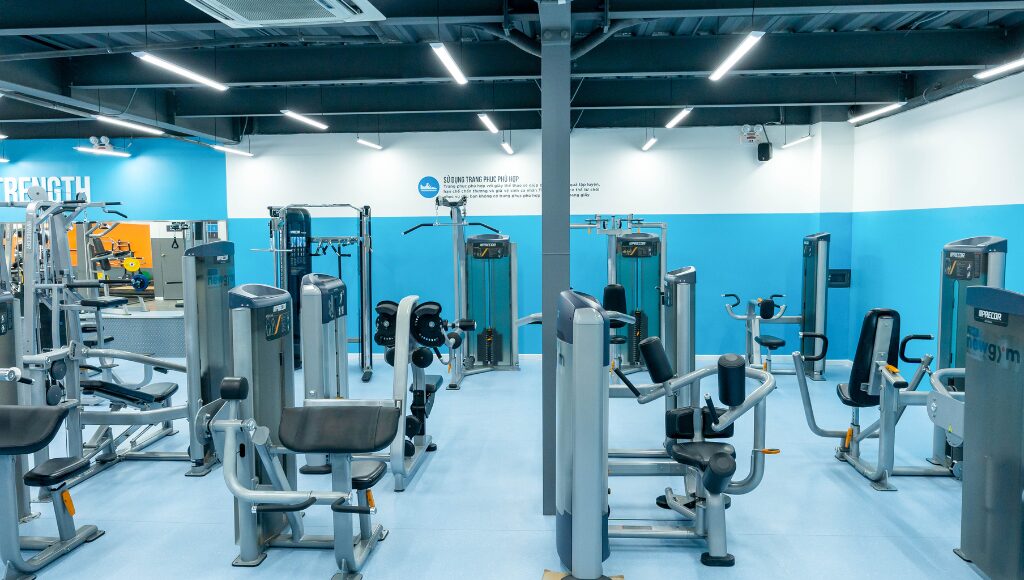
- More equipment than at home: functional zones and cable machines let you gradually increase the difficulty of ab exercises (depending on location).
- Support staff: show beginners how to use the machines.
FAQ: Frequently Asked Questions About Ab Exercises
1. What’s the most effective way for beginners to train abs?
Start with 3 core exercises: the Plank (whole core), the Crunch (rectus abdominis) and the Bird-Dog (core + lower back). Do these 3 exercises 3 times a week for the first 2-4 weeks before adding new ones. Most important is to keep good form and not rush to add reps.
2. Is training abs at home effective?
Absolutely. 90% of ab exercises need no equipment; a mat is all you need. What decides results isn’t where you train but consistency + good nutrition. That said, after 3-4 months it’s worth moving to the gym for more variety and to break through plateaus.
3. How long does it take to get a six-pack?
With good technique and a calorie deficit, most people see a six-pack after 3-6 months. However, people starting at higher body fat (over 25%) need 6-12 months. The most important factor: body fat needs to be around 14–17% (men) or 21–24% (women), according to the ACE table above.
4. How should beginners do crunches without neck pain?
Rest your hands lightly behind your head without pulling, eyes looking at the ceiling. When crunching, use your abs to lift your shoulders, not your neck. Lower slowly over 2-3 seconds for control. If your neck hurts, cross your arms over your chest instead.
5. Is ab training at home different for men and women?
It’s basically the same, as men’s and women’s abs are built similarly. However, men often train for a clearly defined six-pack, so they can increase intensity and add weights. Women often prioritise a slim waist without a “thick” midsection, so they focus more on the Side Plank and Russian Twist.
Start with 3–5 exercises from the list, train 3 times a week and only increase the difficulty once your technique is right. A strong core keeps your back safe when training other muscle groups and helps you progress steadily over the long term. If you want to train with machines and have staff help you use them, you can try 7 days of free training at The New Gym, with most locations open 24/7.

🎯Articles on abs & core
A collection of 36 articles about abs & core, ordered by how often they are read.
- What is core training? Top core exercises from beginner to advanced
- The Secret to a Firm Lower Belly with Flutter Kicks
- The Most Detailed Guide to Mountain Climbers
- How to do the Dead Bug correctly and avoid back pain
- What is the side plank? Which muscles it works and how to do it right
- Get an Hourglass Figure with a Plan to Build Muscle and Cinch Your Waist
- 2 Rapid Fat Loss Plans: Just 10 Minutes with the Most Effective Ab Exercises
- How to Get a Six-Pack: 5 Exercises and the Body Fat You Need
- A 10-Minute Routine to Burn Your Whole Core
- End Back Pain and Improve Posture with This Training Guide for Women
- A Guide to Core Exercises for Wheelchair Users
- Top 7 most effective 15-minute ab exercises for women
See 25 more articles ▾
- ‘Blast Belly Fat’: 5 Compound Exercises That Boost Your Metabolism
- Toe Touch Crunches: Proper Technique, Mistakes to Avoid and Variations
- Waist Training with a Partner: Beat Excess Fat Fast
- What are the intercostal muscles? 6 intercostal exercises for women
- 9 six-pack ab exercises for men in just 10 minutes at home
- Aerobic Exercises to Lose Belly Fat and Slim Your Waist for Everyone
- Belly fat exercises before bed: 8 simple moves
- Safe Postpartum Belly Fat Exercises for New Mums
- Top Simple Belly Fat Exercises at Home
- 5 Reasons to Train Your Abs Regularly
- 6 oblique exercises for a slim waist for women
- Simple flat stomach exercises at home for beginners
- What are Kegel exercises? How beginners can do them correctly
- The Complete Ab Training Guide for a Slimmer Waist
- What Are 11-Line Abs? Exercises and the Facts You Need to Know
- The Most Detailed Guide to Sit-Up Technique
- Hanging Leg Raise: A Guide to Conquering Your Six-Pack
- Russian Twist: The Secret to a Slimmer Waist
- How to do the Bird Dog with proper technique for beginners
- How to Do the Crunch with Proper Technique for Beginners
- What is bracing? How to brace your core when training
- How to Do a Plank Properly for Beginners
About The New Gym
The New Gym is a gym chain with 15 clubs in Ho Chi Minh City, Can Tho, Da Nang and Dong Nai. Most clubs are open 24/7, while Can Tho and Bien Hoa are open from 5am to midnight (see opening hours for each club). Memberships start from 299,000 VND/month on the 6-month plan, including 11+ free group classes. Guided by our “Gym for everyone” philosophy, first-time visitors get a 7-day free trial.
📞 Hotline: 1900 63 69 20
📌 Facebook: facebook.com/thenewgymvietnam
💬 Zalo: zalo.me/4267108480570109866


