
This article is for reference only and does not replace medical advice. If you’re under 18, get your parents’ permission before starting to train. If you have heart disease, high blood pressure, epilepsy or a chronic condition, ask a doctor first.
There’s no fixed age to start going to the gym. Children can get used to bodyweight movement from quite early on. Ages 13–15 are suitable for starting gym training with supervision. From 16–18, you can train much like an adult, increasing the weight gradually.
The worry that going to the gym stunts your growth has no scientific basis. What you really need to worry about is lifting too heavy, with poor technique and no supervision.
This article is for teenagers who want to start training and parents considering letting their child go to the gym. The New Gym covers age guidelines, training schedules, three plans by level and safety tips.
How old do you have to be to go to the gym?
Age is just a guide. What matters more is whether you’re mature enough to follow instructions and keep good technique.
- Under 12: Prioritise play, sport, running and jumping. Children can get used to bodyweight exercises as games, like jumping or crawling, with an adult guiding them.
- 13–15: Start gym training with supervision, focusing on technique with bodyweight exercises, machines and light weights.
- 16–18: Can train close to an adult program, including free weights, as long as the weight goes up gradually and technique stays good.
According to the American Academy of Pediatrics (AAP), children of all ages can benefit from strength training with appropriate supervision. Strength training also isn’t just lifting weights; it includes lots of bodyweight exercises.
Does going to the gym during puberty stunt your growth?
No. Guidance from the American Academy of Pediatrics (AAP) concludes that well-designed strength training programs don’t harm the growth plates or height of children and teenagers.
Height is mainly determined by genetics, along with nutrition and sleep. Going to the gym won’t make you taller, but it won’t make you shorter either.
Injuries in teenagers usually come from lifting heavy at home alone, dropping weights, poor technique, or trying to lift a maximum weight with nobody guiding them. That’s why supervision matters more than any age number.
Benefits of going to the gym during puberty
The AAP notes that proper strength training makes children healthier in many ways, not just in muscle strength.
- Stronger bones: Puberty is a period of rapid bone growth, and resistance training increases bone density.
- Fewer sports injuries: Stronger muscles and tendons can handle running, jumping and changing direction.
- More confidence and better mood: Seeing your progress week by week builds confidence and reduces study stress.
- A lifelong exercise habit: Starting early makes movement part of your life, with less time sitting in front of screens.
WHO guidelines from 2020 recommend that teenagers get an average of 60 minutes of activity a day. At least three days a week should include exercises that strengthen muscles and bones. Going to the gym is one way to reach this, alongside sport and walking or cycling to school.
See also: Proper Hydration When Training: Boost Performance and Prevent Overheating
How many times a week should teenagers train?

An ideal week includes sport, strength training and cardio, rather than just the gym. The table below is a guide for the gym part:
| Age | Sessions per week | Priority exercises | Session length |
|---|---|---|---|
| 13–14 years | 2 sessions | Bodyweight, light cardio | 30–45 minutes |
| 15–16 years | 2–3 sessions | Machines, bodyweight | 45–60 minutes |
| 17–18 years | 3–4 sessions | Machines, light to moderate free weights | 60–75 minutes |
Leave at least one rest day between two sessions for the same muscle group.
If you’re just starting, see our gym guide for beginners to learn the foundational exercises first!
3 gym plans for teenagers
Work through plan 1 to plan 3 in order. Only move on to the next plan once you can keep good technique on the previous one. Warm up for 5–10 minutes before each session and stretch for 5 minutes after.
Plan 1: Bodyweight training at home
For those new to exercise who don’t need to go to the gym yet.
- Squat: 3 sets × 10–12 reps
- Push-up (can be on your knees): 3 sets × 6–10 reps
- Glute Bridge: 3 sets × 12 reps
- Plank: 3 sets × 20–30 seconds
- Mountain Climber: 3 sets × 20 seconds
- Jumping Jack: 3 sets × 30 seconds
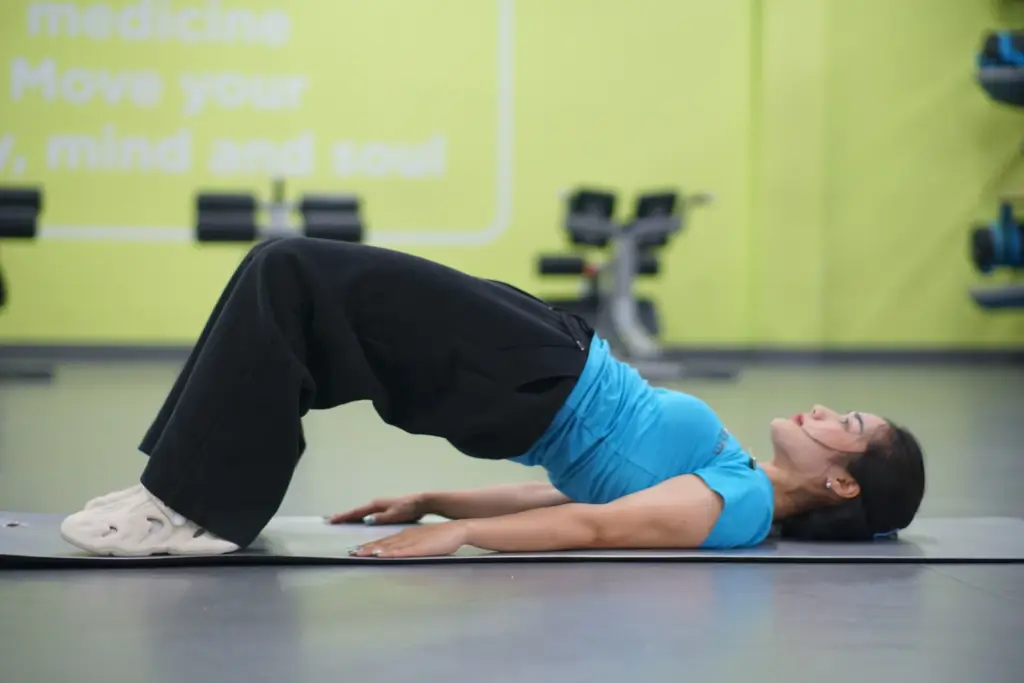
Plan 2: Machine training at the gym
Machines have a fixed path, making movements easier to control and safer when you’re new to the gym.
- Chest Press: 2–3 sets × 10–12 reps
- Seated Cable Row: 2–3 sets × 10–12 reps
- Leg Press: 2–3 sets × 10–12 reps
- Lying Leg Curl: 2–3 sets × 10–12 reps
- Shoulder Press Machine: 2–3 sets × 10–12 reps
Start with 10 minutes of light cardio on the treadmill or bike.
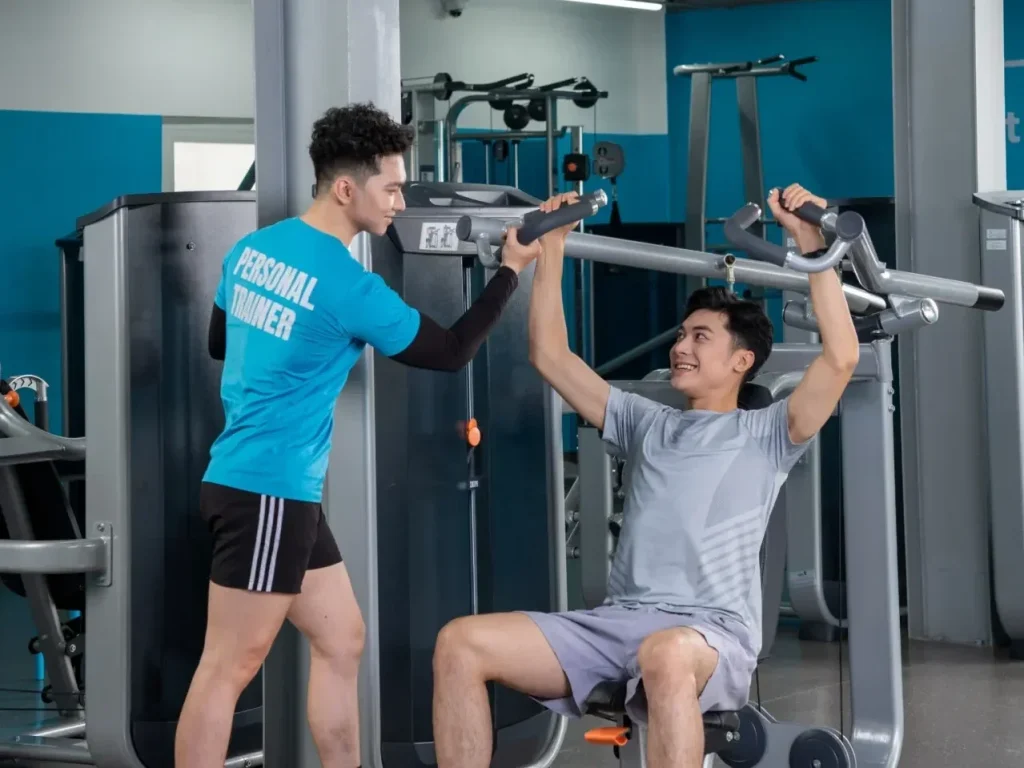
Plan 3: Free weight training
For those aged 16+ who have solid technique on the previous two plans. Have a trainer with you for the first few sessions.
- Goblet Squat: 3 sets × 8–12 reps
- Dumbbell Romanian Deadlift: 3 sets × 8–12 reps
- Dumbbell Bench Press: 3 sets × 8–12 reps
- Lat Pulldown or Assisted Pull-up: 3 sets × 8–12 reps
- Dumbbell Shoulder Press: 3 sets × 8–12 reps


Safety tips for teenagers at the gym
Technique first, weight second: Choose a weight you can lift for 10–15 reps with good technique. If you can’t manage 8 reps, the weight is too heavy.
Don’t test your maximum: Avoid competing over who lifts heaviest or trying record weights without a trainer.
Always have supervision: Don’t lift heavy alone, especially at home.
Don’t use muscle-building supplements: Creatine and performance-enhancing products aren’t recommended for people under 18.
Eat and sleep enough: Eat full meals with rice, meat, fish, eggs, milk and vegetables. Don’t follow strict diets while you’re growing. Sleep 8–10 hours a night.
Tips for parents
- Ask a doctor first if your child has a condition: Especially heart disease, high blood pressure, asthma, scoliosis or a past serious injury.
- Ask about the gym’s policy: The minimum training age, whether there’s supervision and whether a trainer can accompany them.
- Go with your child for the first few sessions: It helps you understand what they’re doing and feel more confident about the training environment.
- Pay attention to how your child talks about their body: If your child trains too much, diets strictly or worries excessively about their appearance, talk to them and seek professional advice.
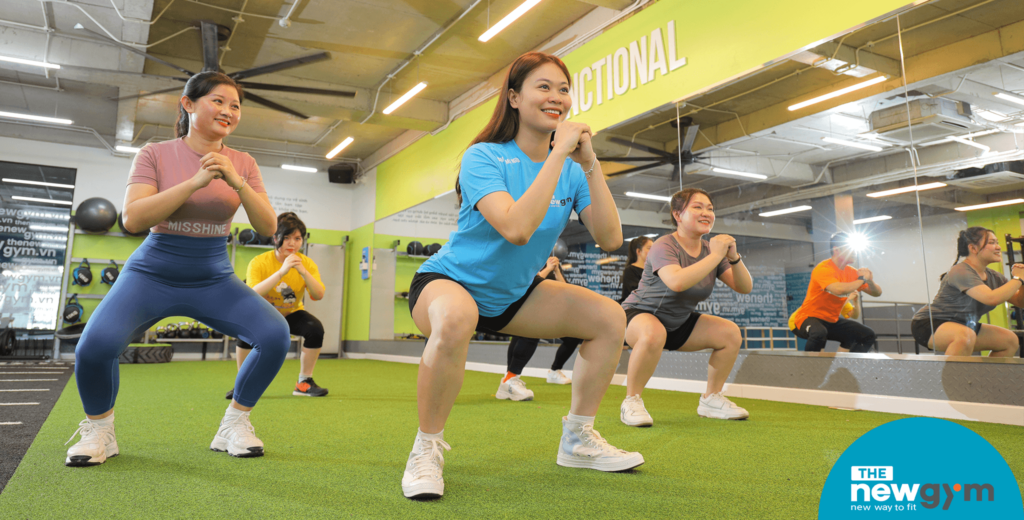
Students at the Gym: Scheduling and Costs
From 18 upwards, students can train like adults. Common challenges are changing class schedules and a limited budget. A plan of 3 sessions a week, 45–60 minutes each, is enough for steady progress. Choose a fixed time slot that rarely clashes with classes, such as early morning or late evening. On costs, see affordable gym costs for students to choose the right membership.
Frequently asked questions about teen gym training (FAQ)
Should a 14-year-old go to the gym?
Yes, with supervision and parental permission. At this age, train 2 times a week, prioritising bodyweight exercises and light machines.
What should a 17-year-old keep in mind at the gym?
At 17, you can train close to an adult program, 3–4 times a week, including free weights. Still prioritise technique, increase the weight slowly, don’t test your maximum without a trainer, and sleep 8–10 hours a night.
At what age can you use free weights?
There’s no required age. Usually from around 16, once you have solid technique on machines and bodyweight exercises, you can start with light dumbbells under supervision.
Should teenagers take whey or creatine?
Creatine isn’t recommended for people under 18. Whey is just a protein source from milk. Most teenagers who eat well already get enough protein from their meals, so they don’t need supplements.
When should you stop training and see a doctor?
Stop training and see a doctor if you have knee, shoulder or back pain lasting more than a week, lasting tiredness, trouble sleeping or unexplained weight loss. If you have chest pain, shortness of breath or feel faint while training, stop immediately and call 115 if the symptoms don’t ease.
Starting the Gym the Right Way as a Teenager
Puberty is a good time to start going to the gym, as long as you have supervision, good technique and increase the load gradually. Proper strength training doesn’t stunt growth; it makes bones stronger and reduces sports injuries. Start with bodyweight exercises, move on to machines, and only then to free weights.
Download the The New Gym app for useful guidance and visit your nearest The New Gym today to start turning your goals into reality!
🎓Articles on teens & students
A collection of 3 articles about teens & students, ordered by how often they are read.
About The New Gym
The New Gym is a gym chain with 15 clubs in Ho Chi Minh City, Can Tho, Da Nang and Dong Nai. Most clubs are open 24/7, while Can Tho and Bien Hoa are open from 5am to midnight (see opening hours for each club). Memberships start from 299,000 VND/month on the 6-month plan, including 11+ free group classes. Guided by our “Gym for everyone” philosophy, first-time visitors get a 7-day free trial.
📞 Hotline: 1900 63 69 20
📌 Facebook: facebook.com/thenewgymvietnam
💬 Zalo: zalo.me/4267108480570109866


